Plotting vs. Pantsing: What Type of Writer are You?

Are you a detailed outliner or do you prefer Pantsing? Do you really know what it means to be a true Pantser when it comes to writing your novel?  

I was procrastinating and doing a bit of web surfing while really figuring out how to write myself out of a scene I was currently working on when I came across this article by Lauren Sapala on What “Pansting” really means. I found it  more than a bit interesting and I discovered I am a combination of the two.  What are you?  Click HERE to read Laurens’ article.


The Lure of the Research Rabbit Hole and How to Avoid Falling In

While I was researching on the internet the other day, looking for interesting blog topic ideas, I found myself—despite my resolve—distracted by a variety of articles on topics from folklore surrounding white horses in Scotland (which I decided I will write about in the future) to one of the oldest curse words, what it means, and how it was used. (From what I surmised, there are quite a few to choose from: Egyptian, Viking, and Japanese. Did you know the word “swive” is the medieval equivalent of the word “fuck”? Not totally unhelpful, as the heroine of my current WIP lives in fourteenth-century Scotland and swears a lot.) I did like the word “shiteater” from the Egyptians (though pronouncing it in the original language is impossible). And then, of course, how could I pass up on reading an opinion—well, more like a debate—on whether the actor playing Rip on “Yellowstone” was hotter than the actor playing Matthew on the series “A Discovery of Witches”? I admit, it was close, but in the end, I had to go with Rip.

Two hours later, with no topic chosen, and not a word written, I stared at the blank screen and realized I had gone down the research rabbit hole once again. If not for all of us, it is for a large percentage of writers so, so, tempting to procrastinate getting on with our first draft or beginning revisions when we know we need to cut scenes we love and labored over but don’t actually move the story forward. Or we have to add scenes because we missed a major plot hole. What better way to put off these difficult tasks than to get lost in the research of some oh-so-fascinating fact or piece of trivia that is not necessary or needed?

By the way, it’s important to note: you don’t need to become the foremost expert on anything for a first draft, or even when you revise. I, for example, do not need to know the entire history of Scotland. I just need to know before I write what is going on in my protagonist’s world and how, historically or politically, it might affect them. Yes, it’s important to understand the details of the world your characters are inhabiting, but you don’t have to have research notes for every little thing. Fiction does give a writer more than enough room for some dramatic license.

 Readers most want to connect with your characters when reading a novel. It they become interested enough to want to know more about a particular period or place, they can read a history book or watch a documentary about the subject. What smart and focused research can give you as a writer is the ability to bring something new to the story with a little-known fact or occurrence that is not widely known but can be woven into your story.

Here are a few tips to help you stay clear of the time-sucking rabbit hole:

1.      Do some pre-research on the major elements you need to know to pull the plot together. If you are writing about a town you’ve never been to, go there if you can and walk around, explore. If there is a local watering hole you are going to use in your story, going in and getting a feel for the place and the people who hang out there will be helpful in setting the mood. If the location is on the other side of the country or world, get to know Google Maps, from which you can take a walk down the street and get a close-up look at the landscape, the important landmarks necessary to make your reader feel like they are there with your characters. Read other authors whose tales are set in the same time as you’re writing. This is not research, but it will give you great insight on how other writers approached their story, how they wove detail into action and dialogue.

2.      Once the first draft has been started and you absolutely need to look up something, get in and get out. Set a timer. I have found that the three-click rule has always been effective. If you can’t find the information in three clicks, make a note. I write “need to look up” in parentheses. For example: “(what did women wear for underwear in 1309).” The highlight the note and get back to writing. If you pause in the middle of a writing session because you absolutely need to look up something, make sure it is a specific something.

3.      Be wary of overuse of your thesaurus or dictionary. For me, at least, looking up one word leads me to look up a dozen more, and then I need to know when the word was created (it’s important with historical fiction not to use a word that was not in use until the eighteenth century when your story takes place in the fourteenth), and before I know it, another two hours of hanging out in the rabbit hole has passed and what I intended to be a quick pause in my writing session becomes a time-suck of epic proportion.

4.      Turn off the internet. Did you know you can disable your internet while you are writing? Or, if you are like me and the temptation to turn it back on is too tempting, go to a venue where you can’t connect. If it’s warm, I highly recommend a park bench with a pretty view.

5.      Change venues and leave your computer at home so you need to write longhand.

6.      If you stop your writing to quickly look up one fact, but get drawn in by another fact that leads you to an idea for another brilliant story, have a separate notebook dedicated to these brilliant ideas. Write it down for later, and return to the WIP. 

None of this is to say research is not important to good storytelling and developing three-dimensional, believable characters. It is. And yes, research can be enjoyable, fascinating, but it can easily become a wasteful time-suck. The bottom line of all the bottom lines is this: you don’t need every detail before you begin writing your story. What you want is to get the words down. You want to write.

The Pursuit of the Perfect Story

I came across this piece by William Kenower about the impossibility of writing the perfect story and the importance of letting go and releasing it to the universe. The quest for perfection is often the biggest obstacle for me to finish a writing project. Letting go and allowing yourself to write The End is part of the writing process for us all. This piece resonated with me and I thought it might with you all as well.

Click HERE to read William’s article . I look forward to hearing your thoughts on this topic and how you overcome your struggles with letting go.

Write Life Wednesday With Bobbi Lerman & Jennifer Safrey

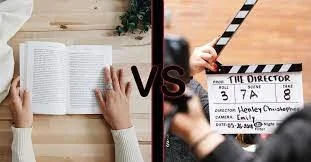
Books vs. Movies: A Contribution to the Age-Old Debate


The Horse Whisperer, Pride and Prejudice, Harry Potter, Murder on the Orient Express, Jaws, and, of course, Outlander and A Game of Thrones (okay, those last two are television series, but they were based on the books, so we are counting them)—these are just a few books that have been converted to the screen in the never-ending need to feed Hollywood quest for the next blockbuster hit. 

If you are a voracious reader, like I and my critique partner and fellow Scribbler Jen are, then you are probably excited to hear when one of your favorite stories is being adapted into a feature film.  And, one of our favorite activities is to discuss—well, more like debate—which actor or actress would be best to portray the protagonist/s or villain. The idea of the characters and worlds discovered and loved from a novel coming to life on the big screen or small screen is irresistible. The hope that they will create a film that is both faithful to and as good as the book is one neither of us has never been able to give up. 

It’s true we have been, more often than not, disappointed, telling ourselves as the credits roll that next time, we will only see a film adaptation if we have not read the book. An excellent case of a disastrous book-to-movie example: The Horse Whisperer. This keeper of a book has a much-honored permanent place on our bookshelves. I vividly remember sitting in the theater, horrified how the filmmakers mangled this wonderful magical story and turned it into a piece of romantic tripe. However, three of my girlfriends who came with me had not yet read the book, and they loved every moment. 

Over the years the realization of how unrealistic expectations often are and how comparing books to their film adaptations isn’t fair have become evident. The two mediums have a markedly different approach to storytelling and both offer different advantages that make them worthwhile. A quote from author Stephen King comes to mind that is perfect here. “Books and movies are like apples and oranges. They both are fruit, but taste completely different.” 

Is one better than the other? Not necessarily. Both mediums often achieve their goals. At their best, they both entertain. Sometimes they make you see a topic in a different way. Both are forms of escapism, taking you to a different place and, often, a different time. 

What does a book offer? If well-written and well-developed, the reader becomes part of the story as an interested observer with insights not just into the character’s actions, but their thoughts, their often-changing points of view, their motivations, and all their inner emotions—at least the ones the writer deigns to share with her readers. With a book, there is more detail and time to subtly weave in backstory. There is more time to develop characters into full-fledged three-dimensional ones. Of course, it’s also a more time-consuming commitment than the couple of hours it takes to watch a movie. Reading stimulates imagination. 

What does watching a movie offer? Well, take “Harry Potter” as an example. You as the viewer are not imagining what Hogwarts looks like; you see it. When you read what J.K. Rowling wrote about what playing quidditch, the dangerous sport played by the witches and wizards on their broomsticks, you have to imagine what it looked and felt like. But with a movie, you can see it. You can feel the wind rushing through your hair as if you were with Harry, riding shotgun. 

Added advantages of movies are the visuals and the music that accompanies each film. A soundtrack can take you someplace, bring up vivid images. Think of iconic soundtracks: Jaws, Schindler’s List, Titanic. Music in a movie heightens emotion and will, in the moment the music swells into its big final crescendo, take you along to feel what the character feels. Even though in a movie you may not have a play-by-play of the character’s thoughts and inner dialogue, movies convey the emotion of the scene by the cinematography, and sound. What was previously confined to the scope of your imagination is now visual. Movie’s show.  

Books and movies immerse you into the story in different ways. Watching a film brings the world and action to life for you to see. Through books, you experience through your imagination, which has no bounds or limitations. Films bring the most fantastical worlds to life before the viewers’ eyes. Film brings characters into flesh and blood. But a good book brings inclusion to a reader that watching a film does not possess. A film lets you observe everything; books let you feel everything. Films are visual escapism at its zenith. There is nothing to compare to sitting in a dark theater with no distraction, your brain focused on the story playing out. A book can place you inside the head of the hero or heroine, knowing all of their thoughts, doubts, and fears so that you see through their eyes with no limits; nothing is impossible or out of reach. 

So, which is better, you ask? 

In the end, it depends on the person being asked. For me, books are always better, even when the film is done with over-the-top cinematic and directorial expertise like “Harry Potter” or “Lord of the Rings.” There is a time constraint in a movie that can’t be avoided, even a long one that goes three and a half hours. If a story is well written and captures my attention so that as a reader, I can’t stop turning the pages—and I let dinner burn or stay up to three in the morning because I just have to know what happens—then it doesn’t matter how long it goes. Books are a kind of magic that stays with you and will find a place in your soul. 


Writer’s Block: Real or Imaginary?

Do you know what scared the spit out of Ernest Hemingway? It wasn’t big game hunting. It wasn’t facing an angry bull chasing after him in Pamplona. It wasn’t war. It was, as he put it, “a blank sheet of paper” and the prospect that words, his words, would desert him. 

For me, scary is knowing what I want to write, what I need to write–but my brain is bereft of words. Well, at least the ones I am searching for. It is playing what if until I am cross-eyed, then trying any other inspirational get-the-words-flowing exercise I have ever heard of to entice my characters to talk to each other or to me as I stare at the blank screen of my computer. This is what will make my stomach clench, make my throat feel like all air is cut off, and make me feel as if my muse, as fickle as she often is, has abandoned me–not just for a temporary moment or two, but forever. 

I have read an abundance of books and magazine articles on the subject of writer’s block. Is it real? Is it a physical thing that someone should develop a pill for? Or is it all in a writer’s head and simply an excuse for nonproductivity?  A rationalization not to write? 

Here’s the good news. Writer’s block is not your imagination in overdrive. It is as real as any other malady and will often manifest itself in a most physical way.   

So, what is writer’s block? It is the temporary (usually) inability to continue or finish a writing project due to fear or anxiety. It is creative paralysis that can last an hour, a day, or decades. It’s not a figment of your imagination. The definition of paralysis is: a state of helpless stoppage, inactivity, or inability to act. That is writer’s block.

Blocks such as these are insidious, starting as what may feel like an insignificant bit of resistance that you assure yourself will go away. But then it turns into anxiety that soon overwhelms, and culminates in intense fear which will for certain make you feel like you are paralyzed because even if you manage a sentence, a paragraph, or an entire page, it’s not perfect. You then convince yourself it must be perfect, even though it’s a first draft. 

The quest for perfection is the main culprit of writer’s block damn near every time.  

Is there a cure?

  • Read. Then read some more. Immerse yourself in story–story that’s not yours. Read fiction. Watch a TV show with great writing. (May I suggest “Ted Lasso” and “The Great”?) Ask a like-minded friend for a movie suggestion and watch that.

  • Go for a walk with no music blasting in your ear and just your thoughts to listen to.

  • Just before you go to sleep, think about the scene or character you are having a problem with. Ask for the resolution to come to you while you sleep. In the morning, write down anything that’s in your mind.

  • Visualize the walls keeping your words prisoner–and then visualize them crashing down. 

The best no-fail remedy, however, is to write. Write for five minutes. Write for ten. Set a timer with the understanding that the creation of one sentence is writing. It doesn’t matter if it’s crap. It doesn’t matter if you jump ahead or back and don’t write your scenes in order. It doesn’t matter a whit if you write outside the boundaries of your WIP. Just write. Write nonsense. Write crap. but write. Yes, I am repeating myself. Move your hand across the page. Write “I can’t think of anything to write” over and over until, trust me, more words will come, even if just out of boredom. You will write something; maybe not something good, but that’s okay. 

This exercise done consistently will help you push through your block. You’ll teach yourself how to write even when it’s not perfect, even when you don’t feel like it, even when other things are going on in your life, even when you hate your project and want to delete the whole thing (please don’t). Though, a warning: you may need to bully your inner critic into going away. The absolute truth of it all is getting any words down is key, because you can revise and rewrite bad writing. You can’t do anything with no words. If we all waited for the right mood to strike us or our elusive muse to appear, there would be a lot fewer stories for all of us to read and enjoy in the world. 

Lastly, think of the person who needs your story. There’s a person out there for whom your book is their favorite of all time. They’re having a terrible day today and could happily escape tonight into the pages of your story–if only you would write it for them. 

Ready, set, write!


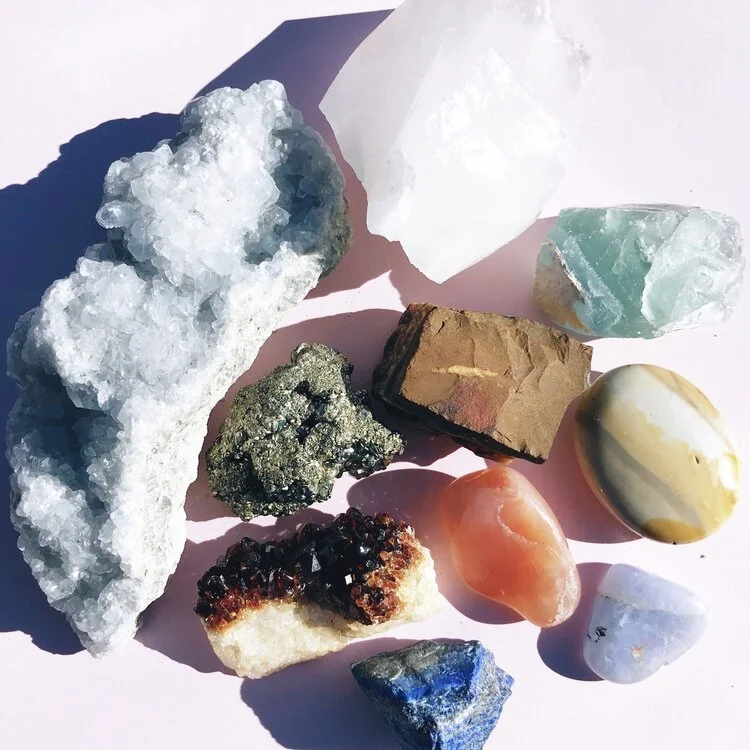
10 crystals every writer needs on their altar

While researching the best crystals to spark creativity and help with writer’s block I stumbled upon this informative blog from The Moonwrite that I wanted to share with you.

As far as writing tools are concerned, crystals aren’t exactly on top of the (conventional) list. But, when utilized, they can add another layer to a writer’s workflow, sparking inspiration, creativity, focus, clarity, and motivation. They can even protect against writer’s block.

If you’re on the hunt for the perfect crystal to elevate your writing, there are a lot to choose from — all with unique properties to aid specific aspects of your writing.

Celestite for Writer’s Block: If you feel blocked, Celestite can help give you a boost of clarity and promote intuition to work through the writer’s block.

Citrine for Brainstorming: Citrine helps writers tap into their inner wisdom and better understand information, making it the perfect brainstorming tool.

Quartz for Clarity: When it comes to writing crystals, Clear Quartz can be used for a multitude of things — but it is best known for bringing clarity to the mind. If you’re looking for inspiration, Clear Quartz can not only help spark the imagination but also help you see clearly what direction to take with your work.

Lapis Lazuli for Journalists: If you are a journalist — or aspiring to become a journalist — Lapis Lazuli is your must-have crystal for writing. This crystal is used to promote truth-telling and healthy communication, ensuring reporters possess good judgment when publishing news, articles, and other stories.

Blue Lace Agate for Blogging: Blue Lace Agate has properties associated with the throat chakra, aka communication. If you are a blogger or thinking about starting a blog, this crystal will help you access your throat chakra, helping you communicate and relay information in a clear and concise manner.

Pyrite for Opportunities: Also known as fool’s gold, Pyrite is a stone of prosperity and wealth. If you’re manifesting new writing opportunities, this is one to keep in your pocket — literally. Keeping Pyrite in your pocket can help manifest financial gain.

Tiger’s Eye for Deadlines: If you’re crunched for time and need to meet a deadline, reach for Tiger’s Eye. Known to bring mental clarity and focus, this crystal for writing is sure to keep you on track. Tiger’s Eye can also be useful for helping you get through any rewrites as it can help with problem-solving.

Jasper for Memoir or Journal Writing: Jasper has a nurturing property, which can bring comfort when working on a memoir or writing in your journal.

Fluorite for Researching: If you’re looking for a crystal that will empower your research sessions, look no further than Fluorite. Known as a learning aid, Fluorite can boost concentration and help with decision-making when compiling information.

Carnelian for Pitching: Carnelian boasts an air of confidence that can help give you that extra push you need to hit send when pitching ideas to a publication, sharing a book proposal, or finally — finally — putting your blog out there in the world. Think of Carnelian as your writing armor and do the damn thing!


Write Life Wednesday with Jennifer Hallock author of Sugar Moon

Sugar Moon Book Cover & Blurb.jpg

I, Jennifer Hallock, have never met a research rabbit hole that I could resist. In order to help me brainstorm a historical romance series set in the American colonial Philippines, I camped out in the microfiche room of Ateneo de Manila University, reading copies of the Manila Times and looking for plot bunnies. I found one: a letter from a young American woman searching for her missing brother. The missive had been delivered to the wrong person and, without any better information on where to forward it, some good Samaritan had published it in the hope of reuniting estranged siblings. I wondered: what could have happened to this brother? Why had he come to the Philippines in the first place? The reason most young men crossed the Pacific was to fight in the Philippine-American War, so had he been a soldier? What if he had survived an attack but had been initially reported dead by the army? (Such things happened.)

I decided that, yes, my Ben was an ambivalent soldier—and after, a troubled survivor. His emotional backstory was shaped by three of my best friends who suffer combat trauma. Two served in Vietnam and one was injured in a terror attack on a US embassy overseas. Collectively, I have spent hundreds of hours sitting in a classroom, at a dinner table, or on a bar stool next to these men listening to what they were willing to share about their nightmares, anxiety, depression, substance abuse, survivor’s guilt, and more. While Ben is none of these men explicitly, he is parts of all of them. I understand that love alone is not a magic potion for posttraumatic stress, and Ben’s journey is not that simple—but love is involved. And, lucky for Ben, he falls for a woman strong enough to lean on.

Allegra Main Character For Sugar Moon

Allegra Main Character For Sugar Moon

 Allegra Alazas was always going to have her book. She stole every scene of Under the Sugar Sun that she was in, and maybe a few she wasn’t. But I knew her love story could not be a traditional one. This young woman might dress conventionally, go to conventional schools, and work a conventional job, but she is still the most unconventional heroine I have ever written. Allegra was inspired by a lantern slide from the University of Michigan collection—or, more accurately, she was inspired by the slight scowl on the face of the woman in the slide. It is a smile that says, “I think you are an idiot, Mr. Photographer—and if you are very lucky, I will tell you so to your face.” Do I tone Allegra down through the book, you might wonder? No. In fact, her relationship with Ben only increases her confidence. He falls at her feet—or, to use a Philippine saying, falls “under her dress.” This heroine was so much fun to write.

Allegra and Ben take quite a journey in Sugar Moon, so not surprisingly the book took me over two years to write. The three of us—Allegra, Ben, and I—think it was worth the wait, and we hope you will too.

Bio: Jennifer Hallock spends her days teaching history and her nights writing historical happily-ever-afters. She has lived and worked in the Philippines, the setting of her books, but she currently writes at her little brick house on a New England homestead—kept company by her husband, a growing flock of chickens, and a mutt named Wile E.

Jennifer Hallock

Jennifer Hallock

Write Life Wednesday an Interview with Marian Lanouette author of All the Deadly Lies

Lanouette.All The Deadly Lies.jpg


I know the Jake Carrington thriller series taken you as a writer on an interesting
journey from self-publishing to traditional with finding a home at Kensington. Tell
us Scribbler’s a bit about that journey.


Thanks, Bobbi. It’s been fun. When I finished All the Deadly Lies (back then
it was if I Fail) I was lucky enough to snag a publisher. This one was a small
press out of Canada. The company was in the early stages of development,
and me a new author didn’t know what to expect. As I’ve learned, it’s the
author’s responsibility to market herself to make the book a success. After
three years with that publisher, I took my rights back and had success in the
self-pub field. I got lucky when Kensington took me and my series on in 2017.
It was a big wonderful surprise to learn they wanted the first two books that
had already been published. With their guidance I’ve added new content, new
endings and punch up of the action. So I hope readers who love series will like
its new direction as I do.

How did you connect with your editor at Kensington?

I met Michaela Hamilton at the K-9 Mission Charity Gala in Boston. The
author Leo J. Maloney (who I highly recommend you read. He’s a fellow MA
resident), who is also my friend, sat me with his editor Michaela and his agent
Doug Grad. It was a fun night for a great cause. For me it was also my lucky
night to be able to socialize with Michaela and Doug as well as networking.

Is Jake Carrington based on a real detective or is he wholly created out of your
imagination?

Wholly based on fiction—he just popped into my head one day and wouldn’t
leave. In fact I working on my first book, Loss of Power (which is still in first
draft stages) when Jake said write me, write me, write me. So I wrote him.

Where did the first inkling for the idea of Jake Carrington come from?

As I said, I was working in my dining room, staring out at the woods, when
Jake’s picture and story started running in my head like a movie. I sat back
and watched it developed. After about an hour, I started typing the first three
chapters than an outline, and my excitement built with the character. I knew
the moment I finished the third chapter that Jake was a series and not a single
novel.

Where you write suspense, crime based stories, have you spent much time with real
police/detectives?


I know a lot of cops, and love listening to their stories. A friend of mine’s
father was a cop in Brooklyn, and another married one. Both would recount
interesting encounters that I ate up.

Have you ever sat in on a criminal case in court?
 

I was called in for two murder trials, but never sat on the jury. At the time my
health had interfered.

Do you write any other genre apart from Romantic suspense?


I write contemporary romance as Merry Holly, and straight up thrillers as in
Jake’s story, and yet to be published (lol, finished) romantic suspense. I’m
hoping to finish A Stone Cold Christmas before August to have published for
the holidays. It’s a romantic suspense novel. If I finish Jake’s fourth book by

my May deadline—I’ll jump on the suspense one. I’ve edited the first three in
2017/2018 and I’m writing the fourth in 2018, and marketing for release day,
and social media-ing to promote. It’s a crazy schedule, but I love writing and
what it entails.

Is there a secondary character in this series that you feel deserves his own story?

The third book which comes out in December 2018 is Louie Romanelli’s story.
He’s Jake’s partner and I love him and his wife, and their relationship. Louie
is old world Italian. It’s been fun to write him.

Are you an intense, detailed outliner or more of a go with a nugget of an idea and
write by the seat of your pants?

LOL, I call myself a pantser/plotter. As I said most stories and characters
come to in a form of a movie in my head. After I let them run their course, I
write three chapters to capture the flavor of the story and the voice of the
main character. Then I plot, and then I replot in the middle of the story
because most times it takes a turn and I follow it.

What is your writing process like; do you write to a specific daily word count? Do
you write longhand or directly onto a computer program? Do you do deep
research before you ever write the opening sentence?

I have a schedule, as if I’m heading to an office. I get up shower, eat, than sit
to write for three hours. Depending on the book and the deadline I adjust my
purposed word count. Most days I shoot for 2,500 to 5,000 words. I research
what I know I need up front, than add to it as questions pop up.

Would you share an excerpt from All The Deadly Lies?

Sure, I hope you enjoy it.

All the Deadly Lies
Chapter 1

“Sergeant, in my office, please.” Captain Shamus McGuire stood at attention in his doorway, all
six-feet- four inches of him. His steel-gray hair cut to military precision focused one’s attention
on his matching gray eyes.
Homicide Sergeant Jake Carrington of the Wilkesbury Police Department looked across his
joined desk to his partner, and lifelong friend Louie Romanelli and shrugged. Louie threw him a
questioning look as he adjusted his tie and started to rise from his chair.
“Just Jake, Louie,” the captain said as he turned into his office.
Jake picked up their latest case file to update the captain and walked in to join McGuire.
“Take a seat, Jake.” The captain pointed to one of the two institutional-gray ones in front of his
desk. He took off his glasses and massaged his forehead.
Though Jake preferred to stand, he took the less beat-up seat on the right. The room was a
monument to the man, all spit and polish. Sparse furnishing with a few awards and medals hung
on the walls. Paperwork in precise piles, a picture of his family, the standard computer and
phone were all he had on his desk. McGuire’s appearance and stance spoke of his military
background and warned his cops he took no crap from them. It wasn’t like him to stall but that’s
exactly what he was doing at the moment. McGuire turned his smoky eyes on him. Jake went on
alert. Something was up, something big.

“Captain?” Instincts had Jake bracing for what came next.
“Spaulding’s coming up for parole again. And this time he’s requesting a DNA test before he
comes before the board.” Jake’s stomach curdled. McGuire continued, “He’s also requesting the
DNA samples from your sister’s crime scene be tested against his sample.”
“What bullshit, Shamus.”
Jake jumped up, roamed the office. His mouth went dry. Deep down he was afraid the old
samples somehow wouldn’t match and would set Eva’s killer free. This new development would
split his attention. What could Spaulding gain from this maneuver? To catch a killer, you had to
get inside his head. Did Spaulding assume the system would release him if he got a new trial?
He looked out the window and studied the downtown area as he ran every scenario through his
mind. This was his town, though imperfect as it was. He and Eva had been born here of
immigrant parents. Its one-hundred- thousand residents depended on him and those who had
come before him to protect it.
Outside of his tour of military duty overseas he didn’t venture far from it, a good city, though
down on its luck since all the manufacturing jobs went overseas. Wilkesbury recently had the
distinguished honor to be named one of the top five saddest rust belt cities. And it’s the one that
was farthest south of the belt. In its glory days, nothing could touch Wilkesbury. Most of the
crime in the city came from the twenty percent of the Wilkesburians living under the national
poverty level. The city had its mix of people, businesses, homeless, shoppers and kids. More kids
claimed the downtown area since UConn had put a branch right across the street from the station.
Today some of the kids wore shorts to celebrate the hot weather. Last week it was in the forties.
Today the temperatures hit the seventies. New England, you gotta love it, he thought.

Clearing his mind, he focused on The Palace Marquee. Next month Johnny Mathis would be
here for two days. He thought it a monument to the citizens of Wilkesbury when private citizens
and businesses raised the money to save the Palace. It had been closed for eighteen years. The
last performer had been Tony Bennett in nineteen eighty-seven. Bennett had opened the newly
restored theater in two thousand four and it was still going strong. Jake loved the old theater. It
brought back good memories from his childhood. The grand old theater done in the tradition of
the Met was a step back in time. Since it had been refurbished it drew some big name performers
and plays. It’s about time we got something decent in the downtown area, he thought. Murders
were down in recent years but overall crime continued. Eva’s death was the reason he became a
cop instead of going on to play pro ball after college.
Turning from the window, he walked back to stand in front of Shamus’s desk. “I’m sorry I didn’t
hear the last part,” Jake said.

“The sperm gathered at the time of the autopsy was preserved, and with new technology he has
the right to ask for the testing.”
“When will it happen? I want to be there through the whole process from collection to testing to
make sure there aren’t any switch-ups.” What a way to start a Monday.

Who would you cast as Jake Carrington to play the movie role?


Matthew Morrison fits the Jake’s description in the book. I think he’d do him
well. I also like Jason Statham as well.

What one piece of advice would you give to an aspiring writer?

Learn the craft. In 2009 I got that piece of advice from an editor at a large
publishing house out of New York, after naively I sent out my first draft to
over twenty agents and editors. I took her advice, and joined classes both
online and at conferences, and seminars, and more important, I joined several
writing groups which offer up some fantastic classes, and it’s also a great way
to network with like-minded writers.

What are your non-writing hobbies if any?


I don’t do it anymore since my heart surgery but I loved to snowboard and
roller blade. I knit and I read, mostly read and walk. There’s nothing like a
great book to sweep you away into another world, or environment. And I like
to travel and hang with friends.


Where to buy All the Deadly Lies
Publisher Kensington/Lyrical: http://www.kensingtonbooks.com/book.aspx/35575
Amazon https://www.amazon.com/Deadly-Lies- Jake-Carrington- Thriller-
ebook/dp/B06VXQBR8B/

Barnes and Noble https://www.barnesandnoble.com/w/all-the- deadly-lies- marian-
lanouette/1125814921?ean=9781516104758

Kobo https://www.kobo.com/us/en/ebook/all-the- deadly-lies
Apple/Itunes: https://itunes.apple.com/us/book/all-the- deadly-lies/id1252337028?mt=11
Google: https://play.google.com/store/search?q=9781516104758&c=books

full head and shoulders shot apielig pictures.jpg


Bio: Marian Lanouette
A self-described tough blonde from Brooklyn, Marian Lanouette grew up as one of ten children.
As far back as she could remember Marian loved to read. She was especially intrigued by the
Daily News crime reports. Tragically, someone she knew was murdered. The killer never found.

Her Jake Carrington thriller are inspired by her admiration for police work, her experience in
working a crematorium, and her desire to write books where good prevails, even in the darkest
times. Marian lives in New England with her husband.
Social Media
Website: http://www.marianl.com
Blog: http://www.marianl.com/main

Twitter: https://twitter.com/AuthorMarian
Facebook: https://www.facebook.com/marian.lanouette
Pinterest: https://www.pinterest.com/marianlanouette/
Goodreads: https://www.goodreads.com/author/show/6478248.Marian_Lanouette
Amazon Author Page: https://www.amazon.com/Marian-Lanouette/e/B0095YFGZ6
My first newsletter will be issued at the end of March 2018. Please sign up now for it here.
Newsletter: http://marianl.com/main/newsletter/

Write Life Wednesday - Dance of Parenting by Natasha Solovieff

Welcome to Scribbler’s, Natasha

Thank you, Bobbi, for asking me to join in.

me.JPG

Tell us Scribbler’s a bit about your book; Dance of Parenting and what inspired it?

The book’s genesis probably started ages ago, given my interest in the interplay between parents and children. And I’ve always been attracted to the idea of writing. One weekend I was at a conference with a lot of professional, mostly female, coaches. When people heard about my blogsite, OMG parenting, they started telling me a lot of stories about their own experiences as a parent. I was struck by some common themes about the challenges in being a mom. Some I had ready solutions for, some I had to pay attention to myself. But it was definitely time to write. I wanted to contribute something that would ease parenting, motherhood in particular.  

What makes Dance of Parenting different or unique than other self-help parenting books on the market?

The Dance of Parenting can be used by a parent ‘from toddlerhood to teendom’, as one reader put it. Its focus is primarily on the parent, because parents love their children and want to do the best by them. Also, all parents get stuck at times; we can’t believe we keep saying THAT again, or keep going round and round in the same argument, or have everyone else telling us what to do but it isn’t working. Then we don’t know how to get un-stuck in a conscious way, not by numbing out. Love is not enough, I have learned. Because we need skills, practices, to get us back into the love (I call it the parenting love zone) when things get off. And that’s what this book focuses on. Simply. Manageably. Lovingly. And it’s small enough to fit in a regular sized purse (that was actually a goal of mine).

Do all parents possess the L.O.V.E. capacities?

I believe so. Some may be more challenged by tapping into them based on temperament or history. But these L.O.V.E. capacities are what make us human.

What is the OM moment you refer to?

There is no one OM Moment. This is my phrase for a brain chill plus. The plus is what brings in the OM. It is highly subjective. But there are certain things it is NOT and certain things it is, all discussed in Chapter 12. It is essential in fast paced, modern day living. It’s something that, once you learn it, it’s great and fun to pass along to your digital era children. My favorite example of it is in my blog about a photo that did it for me one crazy morning.

Would you say this book is good for the newer parent or the more seasoned?

That’s a good question. I originally imagined it for more seasoned parents. But now I have grandparents gifting it for shower presents because they liked it so much! So it seems even grandparents get something out of it that they want to pass along. Since it’s not necessarily a book you read from beginning to end in one sitting - it’s more likely to stay on your nightstand and you read it as needed – I imagine now that anyone can use it at any point in parenting. The self-assessment in the beginning and the first few chapters would be a great read even during pregnancy.

danceofparenting.jpg

Would you share an excerpt from Dance of Parenting?’

Ok. I just opened the book and here’s what I got –

     “. . . Central to this dance is the attunement between parent and child. I was with one mom whose car had stalled. Her son ran around on the nearby grass, while others focused on the car. She became worried that he might run into the busy street and asked him to come closer. He didn’t want to. She took him by the hand. He screamed at the top of his lungs. I looked up and there she stood, still, quietly holding his hand while he screamed. Eventually, he stopped. They hugged and he stayed at her side. I was struck by the peace, the acceptance, the “this is okay, it just is what it is” feeling in her as she gently held his hand, looking straight ahead. I thought to myself, a mom in the love zone. How beautiful!

     Love, even when it comes naturally, is not something that grows without attention, without nurturing. Just like a dance, it takes practice. Author Ursula K. Le Guin says, “love doesn’t just sit there, like a stone, it has to be made, like bread; remade all the time, made new.”

     The Dance of Parenting is about nurturing ourselves with practices that grow our L.O.V.E. capacities. We grow and change because we are engaged in parenting. We are challenged by the world our children are groing up in, by how they are different from us, by our own need to evolve. There is so much that can pull us out of step during our dance in the parenting love zone. If we want to nurture our developing, ever changing children, we must become aware of our L.O.V.E. practices.”

What has surprised you most about being published?

First it was not having a writing focus in the evening. Then it was that I didn’t feel much like writing for a while!  Then it was, oh, I have to care about telling people about the book.

What does your writing process look like; do you write daily? have a word count you aim for? Do you write at the same time in the same place?

Initially my writing process was what I call ‘burst working.’ When I felt like it, I’d write and get a decent amount done. Then I joined a mastermind group, Lauren L’Amour’s Get it Done Group. I learned a lot about my barriers to getting this book done! I started writing at least fifteen minutes an evening (because I work during the day), and once during the weekend, and that is ultimately what got this book done, all the way through the edits. Sometimes I wrote more than fifteen minutes. It didn’t matter where I wrote, I just wrote. Of course, my computer was with me but that was the only constant along with the at least fifteen minutes a day.

The key is to know your barriers. Having other people to ‘talk with’ (this is online), and discussion about success and the cheerleading simply changed me. And it was painless to change.

What was your biggest obstacle in getting from first draft to publication?

There were a couple! Believing in it was one. And then making it through the edit process was another.

Do you outline or are you a panster?

I am a mapper. With large pieces of paper taped to the wall, I mapped several times during the writing.

If you were to give only one tip to an aspiring writer what would it be?

Absolutely just start.

A few Fun Facts about Natasha:


I am a parent. And, I have been looking into the faces of babies, parents, and grandparents for over 20 years in my work as a clinical and public health nurse. I have felt the joys, hopes, disappointments, traumas, grief, fears, concerns, laughter and love of parents and children. I have heard their thoughts, their expectations, their discipline struggles…. I have seen their actions and the effects of those actions. I have interacted with the myriad of professionals who weave in and out of family life. Because of this and being a parent, I have a great appreciation for the range of experience that exists within and between each parent and child.


I know parenting can be one of life’s greatest joys. Absolutely! I also know it can be downright overwhelming at times. I have the distinct advantage of being exposed to cutting edge scientific thought. I want to share that with you because it really does help in working through the challenges associated with modern day parenting! Not to worry, all that scientific thinking will be posted here in ways that will mean something even if you aren’t scientifically bent.

And then, who can ever get enough of good ol’ wisdom; we need it so much when the going gets, well, not so smooth.


So here we go, linking science and spirit for all of us modern parents. It’s a lively time out there; one that none of us has been through before. I hope that OMGparenting.com will be part of how you enhance your joy in parenting, revitalize your understanding and hope, and acquire new (or renewed) direction in your experience as a parent.


weblink to book is http://bit.ly/2qxHbcv  (that my website OMGparenting.com and the page specific for the book).  Or balboa press is http://bit.ly/2uKgZyo


Write Life Wednesday - Interview with author Christina Jones

Scribbler’s is thrilled to welcome multi published award winning author, Christina Jones to Write Life Wednesday!

Bio:  – Christina Jones is the only child of a schoolteacher and a circus clown. She has been writing all her life. As well as writing romantic comedy, she also has contributed short stories and articles to a wide variety of national magazines and newspapers. After years of travelling, she now lives in rural Oxfordshire with her husband and several rescued cats. 

Welcome to Scribbler’s Christina!

DSC_0387 (3).JPG

Hello Bobbi and thanks a million for inviting me – it’s really great to be here.

What would you like your readers to know about you that they would not find in your official bio?

Oooh –well, I’m a rubbish liar so I think my official bio is pretty transparent…. However… there are a couple of things that might have gone unsaid… ok, here goes…. one) I was part of an acrobatic dancing troupe for many years…. And two) I trained and qualified as a teacher. I taught in London and in Berkshire, briefly. I was the worst teacher in the history of the known world!

Tell us Scribbler’s a bit about your story, Only One Woman.

It’s a novel set in the late 1960s, with all the music, fashion, excitement and world-changing events of that vibrant decade as a back-drop – told from the viewpoint of two narrators, Renza and Stella. Renza and Stella are very much girls of the 60s. They don’t know one another and are light years apart, geographically, socially and emotionally. However, they do have one thing in common: they are both in love with drop-dead-gorgeous rock guitarist, Scott…

Who came up with the first inspiration of the story, you or Jane? What was that very first idea?

Oddly enough, I think Jane and I were both toying with the same idea at the same time but hadn’t mentioned it to one another. We had wanted to write together for years but the idea for Only One Woman really emerged when we met at a library event. Jane said she’d recently moved house and unearthed letters and postcards and memorabilia from the late 60s and had started jotting things down in a fictional diary format… and I said I’d had this very similar idea rattling around in my head for a while – and we sort of looked at one another and went “kerr-ching!!!

How deep a back-story do you work out for your hero/heroine before you ever sit down to write?

I never work anything out. I never seem to have to. I’m definitely a punster. My characters

seem to be living inside my head, fully formed and alive… I think I may be a bit bonkers….

When brainstorming a potential story idea, do you begin with character or plot?

Goodness – I was going to say plot… but that’s not strictly true… neither is character. Again, the whole thing seems to be playing out in my head like a film – I just think of a background or theme and then the characters just seem to appear – see – this is why I’d be rubbish at being a writing tutor. I have absolutely no idea how I write or why it happens the way it does…. Sorry.

What traits are necessary for a character that will keep the reader turning the page?

They have to be interesting, definitely; they have to be engaging; they have to be real; and I think they have to be likeable… My readers will identify with them and be rooting for them. I know Scarlett O’Hara, for example, was seen as an unpleasant heroine – but I loved her! I admired her, liked her and thought/hoped I’d act in exactly the same way given her situations… That’s how I hope my characters come across – as real, warts and all! Characters are quite often flawed – but not in a depressing way (I don’t write sad stuff ever) – but hopefully

Would you share an excerpt form Only One Woman?

Of course. Delighted…. This is an excerpt from Stella’s diary on the night she goes to a local dance with her best friend Vix, and first meets Scott.

Stella’s Diary: Saturday 7th December 1968 continued…

In St B’s hall, the dusty green curtains were pulled closed across the stage in the gloomy, moody darkness. Tiny lights twinkled in the ceiling and from one of the deepest, darkest corners, the DJ was playing an early Monkees hit. St Barnabus always put on a good night, and certainly knew how to create an atmosphere.

 The place was packed. Most people had nabbed one of the chairs that were lined up round the outside of the floor, claiming them with handbags and drinks. A few mini-skirted girls were dancing – always the same ones – in front of the stage. Vix and I grinned at each other. We called them the Dolly-Rockers and we knew they’d be the ones trying to get off with the group’s singer later – even if he looked like Quasimodo’s much uglier cousin.

 Vix and I found a couple of vacant chairs right at the front to the left of the stage.

‘Fab. We’ve got ringside seats for when the group – what are they called – oh, yes, Narnia’s Children - comes on.’ Because she knew how ill I felt, Vix was fussing round me like a mother hen. ‘Now, you don’t need to move all night, unless you need the lav of course, if you feel awful. Do you? Feel awful, I mean?’

‘No,’ I shook my head. ‘The pethidine has kicked in nicely – and honestly if this is my last night out I’m going to enjoy every minute of it. It’ll be just my luck that the group is rubbish tonight.’

‘They won’t be,’ Vix grinned. ‘They always have good bands here – even the ones we’ve never heard of like – um – Narnia’s Children.’

The DJ – who was actually Mr Fisk, St Barnabus’ science teacher, who always played records between the live acts and acted as Master of Ceremonies at the Saturday dances – had replaced the Monkees with the Tremeloes. The Dolly-Rocker girls in front of the stage all posed and pouted and pushed each other and danced a bit more wildly.

Then the music stopped, and Mr. Fisk left his record deck, and scampered up on the stage, beaming in the spotlight, clapping his hands for silence.

‘He really thinks he’s Bruce Forsyth,’ I giggled. ‘And this is Sunday Night at the London Palladium.’

The girls pressed closer to the foot of the stage.

‘Ladies and gentlemen, boys and girls!’ Mr Fisk yelled into his microphone. ‘Lovely to see a full house tonight! Now, let’s give a big, big St Barnabus welcome to your sensational band for this evening! All the way from Jersey in the Channel Islands! Let’s hear it for - Narnia’s Children!!!’

Everyone clapped and cheered and whistled and stamped their feet.

‘Blimey,’ Vix said. ‘No wonder we’d never heard of them. They’re foreign.’

The green curtains swished back and the footlights mingled in a smoky haze with the overhead criss-crossing spot-beams; the towers of speakers, slender spikes of microphones and snakes of cables transformed the stage from a school hall to a full-blown rock show; and Narnia’s Children roared into ‘I Get Around’ by the Beach Boys.

‘Wow…’ Vix mouthed, looking at me, wide-eyed. ‘Just wow…’

Just wow, indeed…

It was too loud to speak, to say anything, so we just stared at them – and each other.

The four boys – Narnia’s Children – on stage weren’t just brilliant musicians and sexy movers – they were definitely four of the most devastatingly gorgeous blokes we’d ever seen.

Tall, lean, long-haired and out-of-this-world-stunning, wearing skin-tight, brightly colored flared trousers, and black skinny-rib sweaters that didn’t even attempt to hide their incredible tanned bodies, they rocked into another belting Beach Boys hit, followed by early foot-stomping Beatles, and then The Hollies – all very loud, fast-paced and brilliantly close-harmonized. They could play and they could sing…

West-Coast rock-pop at its best.

The Dolly-Rockers were no longer dancing in front of the stage. Instead, they were pressed, three deep, against it. Just gazing up in total and complete adoration.

I laughed at Vix, leaning close, my mouth to her ear. ‘I think the Dolly-Rockers want to eat them.’

‘I don’t blame them,’ she yelled back. ‘They’re mega, mega cool, totally brilliant – oh, and not to mention the sexiest blokes Harbury Green has ever seen… I’m going to book a holiday in Jersey if that’s what the boys are like.’

Me too, I thought, if I wasn’t going to be annoyingly dead in 48 hours… because I’d just tumbled instantly and stupidly head-over-heels for the beautiful boy on the guitar; the boy with the long silky black hair falling into the amazingly turquoise eyes.

The most beautiful boy in the world…

Is there a secondary character you feel may deserve their own story?

I think Scott should be asked to tell his side of the story!

What is your typical writing day like?

Messy and a bit chaotic… Ok – I probably start writing at around 8 a.m. – I write in the dining room which looks out over the village green so I’m easily distracted by everything outside my window! I write straight on to my laptop. I write flat out, fueled by coffee, until about 1 p.m. – and that’s it unless I’m nearing a deadline. Afternoons are for going out, shopping, walking and meeting friends, housework… And evenings are family time – again unless there’s a deadline looming.

Some Fun questions:

Favorite word? Jostle

Least favorite word? Death

Favorite curse word? Buggeration

If you were to give only one tip to an aspiring writer, what would it be?

 Write from the heart; write what you want to write; write the story you need to tell. Write for yourself – don’t follow trends. Enjoy it!


OOW.jpg

What books or other projects to you have coming up in the future?

I’m starting a new series of my Bucolic Frolics (lighthearted romantic comedies set in Berkshire villages) – with some new villages and villagers – and a cluster of heroines with flower names – Marigold, Poppy, Iris and Violet… the first of these, Marigold’s Magical Mystery Tour, is scheduled for publication September 2018.

To Keep up with Christina:

Only One Woman:  http://amzn.to/2xlUldr

FB: http://www.facebook.com/christina.jones.1677

Twitter: @bucolicfrolics

Website: www.christinajones.co.uk


Write Life Wednesday - FIRST SCRIBBLER'S UK RETREAT SPEAKER ANNOUNCED

liz.jpg


Have you ever wondered how difficult or complex navigating the self-publishing world is? Join us Sunday, September 2, 2018 for the Scribbler’s UK Writing Retreat luncheon speaker and cozy mystery writer, bestselling Amazon author, Liz Hedgecock, as she takes you through her self-publishing journey--thus far.

A whistle-stop tour through what I've learnt (and what I wish I’d learnt earlier) in becoming a self-published author. Caution: may include editing, marketing, covers, and planning ahead.

Liz Hedgecock spends much of her time hopping between the nineteenth and twenty-first centuries murdering people. To be fair, she does usually clean up after herself.
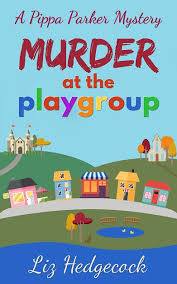
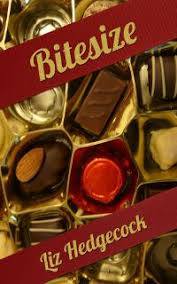
Liz’s re-imagining’s of Sherlock Holmes, Bitesize, a collection of flash fiction, and Murder At the Playgroup, a modern cozy mystery, are available in e-book and paperback.

Liz now lives in Cheshire with her husband and two sons. When she’s not writing or child-wrangling you can usually find her reading, messing about on Twitter, or cooing over stuff in museums and art galleries. That’s her story and she’s sticking to it.

You can also find Liz here:

http://www.facebook.com/lizhedgecockwrites
http://twitter.com/lizhedgecock
http://lizhedgecock.wordpress.com
http://www.goodreads.com/lizhedgecock

Amazon author page: http://Author.to/LizH


Write Life Wednesday - Interview with Jane Risdon

1-IMG_4969.JPG

Welcome to Scribbler’s Jane.

Hi Scribblers, thanks so much for the opportunity to tell you more about myself. I really appreciate it.

What would you most like your readers to know about you that they would not likely read in your official bio?

Gosh that is a hard one. Let’s see. I have so much I could put here. I’ve recorded the voice over for a United Airlines introduction to ‘in-flight’ entertainment featuring one of our recording artists whose material was played on long-haul flights from America world-wide. That was fun.

I’ve done the ‘talk-down’ for American Air Force Fighter Pilots practicing landings and take-off – barely touching the runway – from an American Air Force Base Flight Control Tower in the mid-West of the USA. We were on tour with a band we managed and our Radio station representative decided to take us on a detour to meet up with some old Air Force buddies. We went into the control tower and I was invited to take over flight control – talking directly to the pilots, guiding them down and then up again, as they went through their practice. So very exciting.

I’ve been interviewed by the (then) BBC World Service – radio - as part of their series in the 90s – Women in Rock. As a female artist manager they were interested in my take on all aspects of working in a mostly male environment, and in such a competitive industry where failure is annihilation.

Tell us Scribbler’s a bit about your story; Only One Woman and what inspired it?

This is a long story, so I will try and keep it as brief as possible. I’m married to a musician, I met him when I was 16 and he was 18, when his band came to England to record and tour. The band’s management employed a fan-club secretary who was a rock/pop journalist and short story writer for Teen magazines - Christina. Through our connection – my husband’s band - we all became great friends.

She went on to become a best-selling award-winning author and I married my musician and when he grew tired of touring, we went into international artist/record producer management.

Christina and I had always talked of writing together. It was my dream to be a crime writer – but time was always against me. Christine’ssuccessful writing career, and my constant touring internationally wasn’t conducive, andwe kept putting it off. Besides, she doesn’t write crime and I don’t write Bucolic Frolics (her genre of Romance) so eventually we decided that as we had a shared past with a love of music, fashion - all things late 1960s - we should use our experiences to write about those times.  Eventually we decided to stop messing about and get on with it.

Drawing upon all our shared experience we decided that it would be great to tell a story through the POV of two young girls, caught up in the excitement and vibe that was 1968/1969, and that they would also fall in love with the same musician. That enabled us to litter the story with music and also show just what the music and fashion scene was like in England during those first heady days of what became known as the British Invasion - of music - around the world. They lived through some major events in history too and these are woven into the story too.

1-only one woman purple (1).jpg

Is this story at all autobiographical?

It is not, but of course like most writers we use what we know to embroider our stories. There are elements of us both in the two main characters I am sure; Christina was a rock and pop journalist who wrote short stories – just as Stella does in the book. My boyfriend – later my husband – was a lead guitarist and his band came to the mainland for touring and recording and that is when we met - just they way Renza met Scott.

They say write what you know and we have done so, with lots of poetic license and imagination.

You wrote this with Christina Jones. How did it feel to write a collaborative story with another writer; did you have a lot of differences? How did you mesh your two voices together?

It has been a challenge. We don’t live near each other and everything has been done via email and Facebook…how 21st century! 

We met up a few times to chat about the book generally but she was caught up in several deadlines for producing novels for her then publishers and I was very shyly writing crime stories – short stories and a couple of novels – with no real intention of anyone ever seeing them.

I moved home and whilst unpacking came across old letters, post cards, diaries and tour posters from my husband’s group days, and I began to make notes. The notes became a story with diary entries as the headings and Only One Woman began to take shape. Christina joined in and we wrote it over a period of years.

I had by this time signed with a publisher, which I later found out was publishing some of Christina’s books, and she sent the first few chapters to them – telling me afterwards. They signed the novel immediately and we had a publishing date of 2014. Due to various reasons this was changed several times and at last Only One Woman is being published November 23rd 2017.

Apart from time constraints and a lot of research we’ve both had to do regarding everything 1968/1968, it has not been difficult. I don’t know why but our ‘voices’ seemed to merge really well. I suppose our shared musical background and love of that era has shone through. We hope so. Only our readers will know and I am sure they’ll tell us.

Neither of us have ever done this before so it has been a learning curve for us both. Writing with someone who is so experienced and with such a fabulous track record was daunting to begin with but she was nothing but kind and helpful and encouraging. She was the person – other than my husband - who made me believe I could write and supported my efforts. If it hadn’t been for her reading my early stories I would never have climbed out of my hole and entertained the idea of showing my work or being published. She was very trusting of me placing her name with mine on a novel.

How much influence do your characters have on the direction the story takes?

Mostly my experience is with crime writing and I am forever surprised at the actions of my characters and where the story goes. I never have an ending planned and write by the seat of my pants. Exciting but it can get hairy. Ms. Birdsong Investigates – my series featuring a former MI5 Officer fallen from grace and going nuts in rural village until she becomes involved with Russian Mafia, Ukrainian gun and drug runners and murder - is very unpredictable. She does the most amazing things without ever asking me first. She writes her stories and I just follow obediently.

Only One Woman was a little more planned in that the diaries, cards, letters and posters were a starting point and so Renza was the main character to begin with and her voice drove the story until Christina – and Stella – took over. Writing the novel in diary format enables both characters to take the lead and to tell their own story according to a time-line.

If Only One Woman were to be made into a movie, who would you cast as Renza, Stella & Scott?

I’ve been asked this before and my answer is always the same. I have no idea. If we were in the late 1960s I could name several actors/actresses to play the leads but having worked in Hollywood and been involved with movies and television series, I know that the whole story would end up being changed to fit ‘Hollywood,’ and the leads would all be American so what we’d end up with as a movie would be ions away from what we’ve written. They’d put an American lead in to ‘sell’ the movie to American audiences - that is how things work. If someone says they want to make a movie, I am sure we can swallow our pride…

How do you normally begin your stories – with a phrase, a character?

I get ideas from over-heard conversations, news items, or from my own experiences more often than not. I try to write the same way I’d make a record. Start with a good hook and draw the reader in as fast as possible. Writing for me is just like creating a piece of recorded music. The highs and lows – action - and constant theme (chorus and melody) which embeds itself (one hopes) in the mind of the reader (listener) ending with a climax leaving the reader/listener wanting more…well that is the plan anyway.

Only One Woman begins with Renza’s thoughts as she rushes home from the Top Rank where she and her friends have seen The Equals playing.

‘…What a flipping nightmare of an evening. I really thought I’d never get home inone piece.Everything that could go wrong, went wrong. Someone up there hates me I’m sure…’

What is your opinion on self-publishing vs traditional publishing?

My knowledge of self-publishing is zilch. I have not gone that route so far. I’ve contributed to anthologies which have been published by groups of authors but I have never been involved in the publication side.

I know I’m always comparing writing with music but there are so many similarities. Take a large record company signing new artists, they are enthusiastic about the artist, and often really push the boat out for them with money thrown into PR and marketing, making sure the record has the best producers working on it and that they spend a lot of money on videos and radio exposure and possibly touring. The artist receives an advance (or not) to pay for all this and if there is anything left over, they get some cash to spend on what they like. It is all recoupable from future sales. So the artist is in debt from day one.

If the artist is lucky the record sells and everyone is happy and recoupable advances are paid off and the next record advance is paid and the process begins again. Any un-recouped advance is rolled over to the next album(s) and added to additional advances and so on. If the artist never recoups by the time they split from the label the money is written off. This is why so many artists are actually broke.

However, typically a record company allows so many weeks for the record to do well – to sell and chart. If it is not charting, sales are not happening fast enough and everything is taking too long, well, they don’t actually stop working the record they tell you, but in actual fact they are concentrating on the other artists releasing at that time. They concentrate all their efforts on their ‘star’ artists anyway, so until they ‘break’ an act, it is a case of sink or swim.

I see this with book publishing.

Back in the late 1980s and 1990s the music business was in the doldrums and frustration with the way the business operated saw the birth of the Indie record labels, and home recording. There weren’t any advances, and the artists had to survive the best they could. The live scene died due to lack of financial input by the established record labels – pay to play became common in most venues where new bands cut their teeth. Major record companies became lazy and they began to trawl the Indie labels for artists who had created a ‘buzz,’ developed their own ‘following’ and had something the bigger companies could move in on and benefit from – all the hard work having been done for them.Some of those artists became successful and others didn’t. The major record labels dropped those who took too long to make money – the accountants had begun running the music business.

I can see similarities with book publishing, as I said. There is a lot to be said for control of your output, about keeping money you earn without paying the middle man. But, hit the jackpot with a major player with their resources and contacts, with a big push – well, one could find oneself as a New York Times best-seller and a major book prize recipient. In my opinion it doesn’t hurt to try either route as a writer. Whatever feels right.

Do you write to a specific word count daily or write to the inspiration of your muse?

I have no idea about muses – I don’t think I have one. I thought painters had those. I write whatever comes to mind and I write until I am done. It may take a week and it may take a few years, but I please myself in the main unless I am meeting deadlines set for me.

I often have to write to deadlines and word counts for projects. It doesn’t worry me to have to do so. As I’ve said, I can relate book writing to record production and song-writing too. Discipline kicks in. One has a time-line for release and one has to provide so many songs per album to get written and produced within that time. One has approximately 3minutes to about 3.5 minutes per song to write – so one gets on with it. If I have been told to write 90,000 words in a month I will do it.

If I set myself goals for my own non-publisher projects, I’d never reach them, however. I write when I feel like it and the story dictates the length of the piece. It is done when it is done.

There wasn’t a word count for Only One Woman. The story is about 160,000 words long – it is as long as it needed to be to tell the story.

If you were going to give only one tip to an aspiring writer, what would it be?

Go for it. You have no idea what you can achieve until you try.

What books or other projects do you have coming out in the near future?

Book one in my series, Ms. Birdsong Investigates: Murder at Ampney Parva is in with my publisher. I hope they’ll take it. I’ve part written books two and three so far.

I’ve started part two of Only One Woman – name to be decided – which follows Renza on her adventures beyond 1969. Our editor thought it was a good idea to begin it, just in case there is a demand to know what happened next. It is quite a tale. Stella appears later on. So part two is mainly about Renza. There may well be a book three…

I’m always writing short stories and contributing towards anthologies – often for Charity.

I’m part way thorough a novel based in Bollywood following two English men and their fortunes following the Mumbai bombings in 2008.

I have enough work to keep me out of mischief for years to come.

Thanks once more for this fab opportunity to share my story with you all. Much appreciated. Jane x


1-oow blog tour-001.jpg

The All Time Best Writing Exercise Dreamed Up by a Nun

Let’s pretend you asked me where I come up with my stories. It’s one of the great mysteries for non-writers, but even writers who are normally creative can use a spark now and then.


If you’re a writer, you’ve probably been asked this question at least once and mostly likely a million times. Even Myren, my chauffeur, asked me this once a long time ago before he knew me very well. He regretted it immediately was fascinated with my answer. I wouldn’t have much of an answer for that question except for this one time in school, my nun came up with the most inventive way to get a story going ever.


Sister Joseph—a young nun with a quick smile—dreamed up one of my all time favorite writing exercises. She started with three shoe boxes and a wad of paper ripped up into squares. She handed out three of the small slips of paper—the size of a standard yellow sticky although they hadn’t been invented yet—to each of us in the room.  And since this was catholic school and no government regulations applied—there were about 50 of us in the class.


On the first piece of paper, she told us to write two names—character names. Just the names—nothing else.  


On the second slip of paper she said to write a place for the setting—anything from New York city to a corner store would do—no other details needed.


The third slip was trickier. She said to write an incident or event—for a plot. I wrote murder. Myren doesn’t believe me. He insists I’m lying and I must have written wedding because after all I’m a romance writer. I reminded him that I write romantic suspense. Besides, I said, why would I lie? He said I’m too embarrassed to admit it. I told him—well, never mind. But I told him loudly.


Anyway—back to Sister Joseph. She collected the slips putting them in their appropriate boxes for Character, Setting and Plot and mixed them around. Then we each picked one slip of paper from each of the three boxes.


Up to that point we—or rather I—had no idea where she was going with this and my curiosity was killing me.


“Now using the three elements on your slips of paper, write a story!” Sister Joseph said with her smile wide.


I still remember to this day what I pulled from the box. Madame X and Fluffy were my characters, a penthouse was my setting and I ended up with murder for my plot.  That was all I needed.


My imagination was triggered by the slips of paper. The exercise felt like an adventure. I had such great fun filling in all the details and inventing a story around those crumbs.


Sparked by the excitement of a murder and glamour of a penthouse, I created a wild and crazy story about a glamorous Madame X and her dog fluffy who invited a man to her penthouse and murdered him by kissing him with poisonous lipstick. 


I don’t remember why she kissed him to death. I still had a lot to learn about plotting, but that was my first real attempt at a short story. 


Even if Myren doesn’t agree, I’ve come a long way since then, mostly writing novels. But I went back to writing shorter with many novellas, including my most recent Falling for Captain Hunk. It’s available now as part of a box set Hunks to the Rescue. Myren says the title is longer than the story, but he exaggerates. It’s like saying his hat is taller than he is. Whatever. Chauffeurs can be exasperating especially pretend ones.

Hunks2Rescue3D.800x554.png


There’s still time—to get a copy of Hunks to the Rescue, a boxed set of 18 novellas.

To order Hunks to the Rescue: https://www.amazon.com/dp/B06XNQ583Y/ref=as_li_ss_tl?ie=UTF8&qid=1489613008&sr=8-1&keywords=Hunks+to+the+Rescue&linkCode=sl1&tag=stephan058-20&linkId=2e5539ef6ea135af994ced31b1b71cb9

To follow Stepanie:

http://stephaniequeen.com/

https://www.facebook.com/StephanieQueenAuthor/

SQ Closeup at NEAuthorExpo  Enhanced.jpg

About The Author:

Stephanie Queen is the USA Today bestselling author of contemporary romance. She used to be a 9 to fiver working in downtown Boston, but threw away her stylish suits and fancy heels and now hangs out in UConn t-shirts writing romance novels. She lives in New Hampshire with her family.

Write Life Wednesday - After “The Call” By Jen Doyle

The Call came at 4:01 p.m. on September 1, 2015. I remember it vividly: I was on a party bus on the Mass Pike—somewhere around Exit 10—with fourteen other women I worked with, on our way back from a day job “directors day” trip to Mohegan Sun. I knew my agent had a phone call planned with Carina Press, so I’d been keeping an eye out for an email or text. But although I had (have!) an incredibly supportive group of colleagues, I didn’t want to let on that I’d be getting that phone call with them all surrounding me. What if it wasn’t the news I wanted? It was one thing to be disappointed, but to be disappointed in front of everyone, well, it wasn’t exactly the experience I was going for.

So I kept myself a little bit apart from everyone, up at the head of the bus. And when my phone rang I just ducked my head and turned to the window and closed my eyes as Sarah said, “I have good news, Ms. Jen.”

To be honest, I don’t entirely remember much about the phone call beyond that. I do, however, remember hanging up, turning to my friend and mumbling, “They want to publish my book.”

I think there was a double take. I know there was subsequent jumping up and down and screaming as well as a very exuberant dance session to Shut Up And Dance while the party bus continued along. It’s quite the memory, and, if this were a fairy tale, this would be the part where it says, And they all lived happily ever after.

As anyone who’s ever seen Into the Woodsknows, however, things don’t end there. There’s a whole heck of a lot after the ‘ever after.’

It’s been a year and a half since that phone call and a lot has happened since then. I know my experience has been different from other authors, and, I’ll fully admit, I was a total newbie so there was a lot I had no clue about but of which everyone else in the world might be fully aware. But in the event there’s anyone else out there like me, here goes…

Within about a week of that first phone call I had been introduced (via email) to my editor, Alissa, and the team at Carina. One of the first things that Alissa sent to me was what is called the “Art Fact Sheet.” This is a worksheet that the art team uses to design the cover. It asked for a short synopsis (no more than a few paragraphs), descriptions of the main characters, the general tone of the book, and, most importantly, if there are any specific physical characteristics that I want to convey. It also asks for any particular images that may have been used as inspiration.

In the case of CALLING IT, I had a very clear image of my hero and heroine, and I also had a strong sense of the town of Inspiration, IA, which is the small town in which the series is set. Sending pictures is never a hardship—and, thanks to Pinterest, I have boards upon boards to choose from—so that part was a lot of fun. I also had the benefit of stumbling upon the photography of Larry Lindell, whose spectacular images of Iowa conveyed the mood I wanted exactly. And, of course, there’s the baseball aspect—Field of Dreams, anyone? But I still had no idea as to how anyonecould take all of that and boil it down to one cover that represented all of those ideas.

Before I could think too much about that, however, I received my first set of developmental edits ever. And they were awesome. I don’t know about you, but I LOVE seeing all of the comments on anything I write. Even back in high school and college I was disappointed if I got a paper back with the only note on it being “good job,” even if it came along with an A.(To this day I’m smarting about the A+—yes, A+—I got on my Medieval European History final in college because that was, literally, the only mark on the cover of that little blue book. But WHY did I get an A+? Was it my stellar writing? My incredible ideas?My complete understanding of the topic? I have no clue and those are questions that will never be answered. I can live with it, but I’m not happy about it.)Having spent ten years in the world of Buffy fan fiction prior to submitting anything for publication, I’d grown greedy about feedback, even if it was from people who didn’t like what I wrote. I lived for those five paragraph notes about the latest set of chapters I’d published (known to me now as reviews, LOL), so getting that first set of edits from Alissa was incredible. I was ready to get down to the nitty gritty writing work.

Except the next day I also got what is called the “Retitle Sheet,” so first I had to think about that. Because, to be honest, I suck at titles. I mean, anyone who knows me knows I can, well, write a book. But coming up with a quippy, succinct, attention-grabbing phrase? Not my strong suit. I knew that “The Dream,” i.e., the original title of CALLING IT, wasn’t going to fly, nor was DREAMING OF YOU, my second attempt. And I was thrilled that there would be a team that would help me figure out what the book (I had a book!) would eventually be called. But one of the things that the retitle sheet asked for was—wait for it… Titles! Ugh!

Luckily, that very weekend happened to be what we call “Apple Picking Weekend” at the Doyle childhood home, so on that Saturday night, 14 of my closest friends and family members gathered around the table and brainstormed titles. We came up with a whole list, many of which officially made it onto the worksheet—and a few of which didn’t. (My personal favorite of the no-way-in-hell list was Approaching the Mound, a suggestion of my sister and brother-in-law). Should I mention that my 15-year-old-at-the-time daughter and one of her best friends were there brainstorming with us? No? Okay. Then forget that part.

The official list I submitted included thirteen potential titles. The one that was chosen was…not from the list. And, honestly, I’m not sad. Because the worksheet also included a whole lot of other information, some of it being similar to that on the Art Fact Sheet (synopsis, themes, mood, etc.), but also going into more depth about the book itself, and keywords.

But again I didn’t have too much time to dwell on that because the proposal for book two was also due. At this stage in the process I have a very strong sense of what comes next for me on my writing agenda. But back then I had no idea how it would all go. I had a contract for two books and I had several ideas about what pair came next, but I’m a pantser of the professional variety and had absolutely no idea how their story would play out. So in the midst of working on the developmental edits, I was also doing some major thinking (although I would love to call it ‘plotting’ I can’t honestly say that that’s a good name for what I did) about book two. Oh, and did I mention the day job and the husband and three kids? No? As you can imagine, all thoughts about covers and titles went out the window.

I turned in the proposal on October 15 and the edits on November 4. I got the official word that my proposed book two was accepted on November 17 and began working on it in earnest. And by ‘in earnest’ I mean ‘officially beginning to panic.’ Because, HOLD ON, PEOPLE. I had to write a second book? Was that what I’d agreed to? Who the hell thought that was a good idea? I’d never written a second book before and had absolutely no idea how to go about it. And there’s a lot in that first draft that goes like this:

This chapter has an AMAZING scene it where Deke and Fitz… Well, not sure what they do, but it will be amazing for sure.

No worries, though, because my line edits came in and it was time to edit again, which is my much preferred mode of writing. And, you know, Christmas. And my son’s birthday. And beginning to think about the fact that I was having a book published in April and I had absolutely no idea what that meant in actuality.

Huh. Is it any wonder that the rest of this last year and a half has been a blur? That’s only the first few months of it!
Suffice it to say, I got book two done. And then I got my title—CALLING IT, as you well know. The cover, too, which made me cry—in a very good way. The edits for book two also…which, well, that’s a whole other story.

CALLING IT was published on April 11, 2016, followed by CALLED UP on August 29, 2016, and then CALLED OUT, on May 29, 2017. HOLIDAY HOUSE CALL, a novella set in Inspiration, Iowa, will be out on October 23, 2017.

https://www.amazon.com/Called-Out-Jen-Doyle-ebook/dp/B01MYDLBKH/ref=sr_1_fkmr0_2?ie=UTF8&qid=1498473320&sr=8-2-fkmr0&keywords=Author+Jen+doyle

https://www.facebook.com/jendoyleink/


Write Life Wednesday - The Importance of Capturing Your Stories by Gilda Morina Syverson

GildaBook.jpg

Six days after my northern book launch on April 19, 2015 in Syracuse, New York at Eastwood’s landmark Palace Theatre, my father died. Even though Dad had been sick for a while, it was heartbreak for myself and my large Italian-American family. In readings, talks and speeches that I have given about my book My Father’s Daughter, From Rome to Sicily, I always say, if we don’t share our stories they will die with us. 

Fortunately, my father’s story was captured in two ways—first through my memoir, My Father’s Daughter, where Dad, Mom, my husband, Stu, and I traveled to Rome and then Sicily to the roots of my ancestors. The story, of course, is from my perspective. 

There is another collection that my sister Nicki wrote while Dad sat in his recliner and shared tales that Nicki captured in a personal, unpublished book entitled Money in My Pocket, An Oral History by Nick Morina. In the bottom right-hand corner of the cover is a delightful, one-word description behind my sister’s name, Nicki Morina Richards, Scribe.

Dad has been gone for over two years but his presence was so strong that for Mom, my seven siblings and myself, my father still lives on. Over the last few years as I have traveled for My Father’s Daughter, I have had the great gift of still living with Dad by talking about him through the various scenes in the book, reading excerpts of things that my father did or said on the trip, describing flashbacks of memories from when I was a child, reminiscing over the stories that my father had shared. 

And did he ever share! Dad loved to talk, tell us what he experienced as a barber, an immigrant, a soldier in Europe during World War II, and more.    

What I have learned over these last few years as I’ve been giving readings and speeches about the book, that for most people their two favorite characters in the story are Dad and my husband Stu. Both for very different reasons.

Dad is the in charge, everything revolves around him, person whom “I” really see as the central character, although my father is actually the antagonist, the adversary of the main character. Since the story is a memoir that protagonist happens to be me.  Stu is the comic relief, the glue that holds the rest of us together, the easygoing anything goes person. Since I married someone like my mother, Mom is the other character that stands back as Dad and I resolve our issues, even though we had no idea that was what we were out to do when we set off on our journey.

After the four of us landed in Italy, spent time in Rome and around the Vatican, we traveled by train to Sicily to two more locations:  my father’s region around Messina and his hometown of Gualtieri Sicaminò, before driving our rental car to the Mount Etna area and my mother’s family’s village of Linguaglossa. All the while I learned, especially through Dad’s eyes, about my Sicilian heritage. 

I never started out on the trip planning to write a memoir of my journey. But it was all I could think and write about when I returned. 

Now because of this story, I still get to live with my father again when I read passages of why Dad had for years refused to go to his hometown with me, how he responded to the taxi driver who tried to charge us more at Rome’s daVinci airport, and what it felt like to follow my father up and down the hills of his small Sicilian village.

If I had not written down my memories, they would have died with me. Instead I get to live with Dad over and over again each time I start a reading and say, “My story is about going to Italy and Sicily with my Italian-born father, my Italian-American mother and my very-American husband, and in the back ground is an emotional journey between a father and daughter. ” 

Gilda Morina Syverson, author, poet, artist, educator, and speaker, was born and raised in a large, Italian-American family in Syracuse, New York. Her heritage is the impetus for her memoir My Father’s Daughter, From Rome to Sicily. Gilda’s story was a Novello Literary Award Finalist, a 2015 Nominee for the Ragan Old North State Award for Nonfiction, a 2016 Nominee for Author of the Year for the Artist Guild Award, a 2016 Honorable Mention for the New England Book Festival, the 2017 Runner-Up for Autobiography in the Great Southeast Book Festival, and a Best Seller at Amazon.com.  Gilda has been a long-time Memoir Instructor in the Charlotte, N.C. area including 15 years at Queens University of Charlotte. 
Website:  www.gildasyverson.com
Facebook: @gildamorinasyverson.author
Instagram: @gildasyverson
Twitter: @gildasyverson


Write Life Wednesday - Recording an Audiobook

The Rhythm Within Me: the Experience of Recording an Audiobook 

by Ann Campanella


This past year, I’ve had the wonderful opportunity to record an audiobook. The book is Motherhood: Lost and Found, a memoir about my mother’s descent into Alzheimer’s at the same time I was trying to become a mother and struggling through a series of miscarriages. My mother was ill for 14 years, and much of that time, I leaned on my horse Crimson, who happened to be a grandson of Secretariat. His presence on the farm was a stabilizing (no pun intended) force in my life. While this period of my life often felt hopeless, it changed me as a person, and eventually I was blessed with the birth of a precious daughter.  It seems like divine timing that after a year of working on various aspects of this project, the audio version is due to be released around Mother’s Day.

What was involved?

Recording the book was another transformational experience for me. I’ve always been a reader, but I hadn’t thought much about how this trait had been developed until recently. Every evening when I was a child, my mother came and sat on my bed. She would tuck me in and turn on the reading light she had asked my father to install above the headboard of my bed. She often read pages from a little green book by A. A. Milne called When We were Very Young or from A Child’s Garden of Verses by Robert Louis Stevenson. Sometimes she let me choose a book from the stacks on my bookshelf. I could stretch out bedtime and get her to linger if I asked for one more story or one more poem…which I always did.

Now, over 50 years later, I realize that my mother’s voice has become embedded within me. The week of her memorial service at the family graveyard in Upstate New York, I wandered through the old headstones under the pines and heard her voice, “The woods are lovely dark and deep….” from Stevenson’s “Stopping by Woods On A Snowy Evening.” It suddenly struck me that my poetry, which had provided the seeds for my memoir, was based on a rhythm I had unconsciously absorbed from her. This same rhythm is woven through the prose of my memoir. It is a language of love.

How did it get there?

Along with me my mother, I credit my writing groups. They provided an audience to whom I was able to share out loud the sections of my journal that eventually became chapters in my memoir. I didn’t just read these sections once. But over and over. As I wrote and revised, I wanted every word to be right, delicately woven into the tapestry, creating living scenes where the stitches of the story were invisible. My writing group members listened as intently and lovingly as my mother would have. Their nuanced feedback helped me toward my goal.

How long did it take?

Twenty years. Gulp. No, that’s not a typo. It was a long and arduous process, but I loved every minute of it. Each revision was an opportunity to study the prism of my mother’s life, to nestle against her again and feel the refrain of her love and tenderness wash over me.

There were long breaks in the editing process because I was in the midst of caretaking both my mother and my young daughter. But I was always drawn back to the page, lured by the embrace of my mother’s words. The rolling language that she had planted deep within me was familiar and became a treasured gift as Alzheimer’s gradually took away her ability to communicate.

Towards the end of her life, I couldn’t help but be aware that I was now passing this gift of words and reading on to my daughter, the way Mom had passed it down to me, and her mother had passed it to her and so on. Like I had done with my mother, my daughter snuggled against me at bedtime, and always asked for “one more book.”

Amplifying the senses

Recording my audiobook expanded my sense of what I had written. I was now able to share my story on another sensory level. As I read the words out loud, I re-entered the experience of my book, not just the writing of it, but the living of it, moment by moment. Speaking into the microphone, I lost track of time and simply allowed the rhythm of each scene to carry me away.

I felt the warmth of my mother’s presence, her soft voice speaking under the glow of my reading lamp. I sat with her on my couch when she was agitated because she didn’t know where she was. I walked the hills of her childhood home with her, sharing stories she had long forgotten. I stroked her rice-paper skin as she lay dying. 

Each sentence, paragraph and chapter was another opportunity to be with my mother, to feel her gentleness and the vibrations of a life deeply felt. 

Annheadshot.jpg


To order a copy of Motherhood: Lost and Found, click here. For the audiobook, click here.
Connect with Ann on her social media:
Website: www.anncampanella.com
Blog: Fields of Grace
Facebook: @anncampanella.author
Instagram: @horses_2nd_time_around
Twitter: @authorAnnC

Write Life Wednesday - Discovery vs Plotting vs Edit-As-You-Go by Earl Chessher

Author Earl Chessher

Author Earl Chessher

Variations abound when it comes to how we approach writing. Seriously, however, they can be boiled down to three essential ways we pursue storytelling; discovery, plotting or edit-as-you-go. Why do we do this? Why can there not be one simple, effective, perfect way to tell a story? Well, it’s because we are all wired differently. Some of us can change, while others cannot. Some want to change, but cannot. And the rest of us play hopscotch between them all. You know these, but just to take one more look, one more time.

The plotter is a logically-minded individual who has a pretty decent handle on what she wants her story to be, how she wants it to turn out. Even so, our writer will have everything factored in, from characters and their biographies, to chapters, story elements and an outline that is usually adhered to like glue. The person who likes to edit-as-you-go can be a plotter, or a discovery writer (some say pantser, as to write from the seat of your pants —no safety net) but will take an exorbitant amount of time polishing and perfecting each sentence as they go along. Keep in mind, though, you CAN polish the shine right off. And, you can lose your sense of direction because you are so busy polishing and perfecting, you derail your storyline.

I used to be one or both; plotter and/or edit-as-you-go. I never finished anything more than a long short story using either of these approaches. And though I love short stories I also wanted to be a novelist. I had an epiphany at some point in my more than 50 years of writing and realized that, for me, there is a simplicity in the story first, edit last approach. I might create a bare bones outline at some point, but essentially I have a story idea and ponder what the ending should be. Once I get a feel for that ending, I write toward it, doing my best to not stop and polish along the way. I want to finish the story, see where it takes me (discovery), then clean up, polish and edit. I also get beta readers and hire a professional editor to help the process of FINISHED story.

Discovery writing has become, for me, like reading a book I cannot put down. It takes me places I never thought possible and lets me explore beyond the walls of hardcore planning while getting past the impulse to edit-as-I-go.

Grab a copy of Earl Chessher's latest book here on Amazon

Write Life Wednesday - The Name Game by Susan Hanniford Crowley

Naming characters is a constant challenge for authors. I have a bunch of methods I use to find the right name. 

⦁    Dreams.
 I dream my characters and their stories. Many times first names come with the dream. I am sort of a reporter following them around in the dream. When I wake, I write the story as fast as I can. 

Max from Vampire King of New York and Noblesse his daughter both had their names already when I dreamt their stories.  

⦁    Other Characters.
It’s not uncommon for a character to receive nicknames from other characters. In Vampire Princess of New York, Max names his daughter Noblest, but she doesn’t accept that. Thinking she is damned, she calls herself Noblesse. Her brother David called her Blessie or Bless. Her best friend calls her Noble. The more the reader finds out about a nickname, the more they know about her.

⦁    Other Places when the name doesn’t come right away.
⦁    Phone Books – I love old phone books because you can mix and match.
⦁    Baby Name Books and Sites – I use those especially when I want to know the meaning of the name.
⦁    Cemeteries – Visiting cemeteries especially antique ones will give you access to some wonderful old names. I like to mix and match there as well.
⦁    Scrabble, the board game. When you want a really unique name, toss the letters.
⦁    Friends – While I do not use friend’s names, I sometimes take suggestions especially if I’m looking for names specific to certain countries. 
⦁    Outstanding physical or personality trait. 
Examples would be Flame for red hair or Smiley for one who is always grinning. 
⦁    Named after a great person.  
This may be a first name or last name.  Noblesse is a  Vander Meer and being the princess has to live up to the greatness of her father. In Vampire Princess of New York, she is in charge whenever the king is out of town. 
⦁    The name of an actual person in history. 
When using a historical figure in a fictional tense, be sure to get your history as accurate as possible. I make it a habit not to use a historical figure if they have heirs in present time. If an heir feels you have defamed their ancestor’s name in anyway, they may sue you for it.
⦁    Characters drawn from people you know. – Take Caution!
Always change the name and even the gender to protect an identity and a friendship. Some people are honored and some will sue you. They may be honored at first and then sue you. It’s hard to decipher what someone would feel if they decide they don’t like the character that has their name.  

A friend of mine wanted me to name one of my vampires after him. He wanted just the honor. Unfortunately, I did not get his agreement in writing that it was just an honor, the character in no way portrayed him, and he did not expect any monetary compensation. Shortly before I turned in the final manuscript, he died. Because I didn’t have it in writing, I had to change the name throughout the book before it went through the editing process with my publisher. Otherwise, his heirs could have felt they were due compensation from the book. The character in question did not portray him in any way.   

It’s best not to name your characters after real people. Remember your disclaimer that “the names, characters, places and incidents are the product of the author’s imagination or are used ficitiously. Any resemblance to actual events, business establishments, locales, or persons, living or dead, is coincidental.”

Before I go, I give you the Name Test. I always Google the first and last name combined.  I check at least 10 pages.  My intent is not to make someone’s life unhappy because they happened to share the same name as one of my vampires or other supernaturals. I type in First Name, Last Name, City or Town, and Country. 

I’m working on a new novel in my second series and recently gave the Name Test to my hero. I was more than a little dismayed to find a young man around the age of my vampire. He is very active in social media and has exactly the same name and lives in the same city in the same country. So I’m changing the last name.  I may play Scrabble.  

Enjoy naming your characters.

Susan


Susan Hanniford Crowley, Amazon Kindle Bestselling Author of Vampire Romance
Vampire Princess of New York is available currently in Kindle by clicking here
Vampire King of New York is in Kindle ebook and Amazon Print here 
and at Barnes and Noble Print

Where you can find all her books: https://www.amazon.com/Susan-Hanniford-Crowley/e/B004YXOGXG
Susan’s website: http://www.susanhannifordcrowley.com
Susan’s blog: http://nightsofpassion.wordpress.com
Susan on Facebook: https://www.facebook.com/Susan-Hanniford-Crowley-Author-100144180076034/ 

About the Author: Susan Hanniford Crowley is a member of the Science Fiction and Fantasy Writers of America and the Romance Authors of America, founder of Nights of Passion blog and an Associate Editor with Space and Time magazine. Susan is married and has children and grandchildren. Her passion is the paranormal, and she delights in writing books that readers find “sexy”, “suspenseful”, “a page turner”, “fun”, and “passionate”. 

Partially Handwritten by Ruth McLeod-Kearns

A line from a movie resonated with me recently. The protagonist’s voice-over said, “As hard as it is to write while happy, it’s necessary to write while broken”. Although the film was forgettable, that one sentence lingered - “it’s necessary to write while broken”. I wholeheartedly believe this statement to be true. In my opinion, some of history’s greatest writers were inherently unhappy, manic, and flawed. These exact qualities, as unfortunate as they may seem, were instrumental in molding me into the author I am today. This is my unedited, partially handwritten story.

One of my first defining moments as a writer was the day I declared a journalism major in college. I knew my parents wouldn’t approve, but little things like that didn’t matter to my younger, more free-willed self. The power of the written word was my dream and the world would soon be mine…just not as soon as I had imagined. For – er, um – personal reasons, it quickly became evident that I wouldn’t last four years at a university. Since dropping out wasn’t an option, I did the next best thing and enrolled myself into a two-year nursing program. Passing my boards with only six points to spare, I became a registered nurse before the age of 20. I wouldn’t know this for many years, but the choices I made that year would change the path of my life as a writer forever. Thankfully, this wasn’t exactly a bad thing.

Years passed, babies were born, and I excelled in my latest profession. As we all know, life doesn’t always go as planned, and mine was not the exception. With little notice, the writer within me was hushed by the bells of the emergency department and everyday life – but not silenced. During a brief shining moment in my early thirties, I came into the resources and the time to officially take a charge at my life-long folly. This revelation would produce a manuscript totaling 120 pages of unedited, partially handwritten greatness. Without as much as a re-write, I courageously released my creative spirit into the world and awaited my recognition.
 
The growing list of rejection letters wasn’t the response I had anticipated. Instinctively, I convinced myself to view the declinations as a rite of passage, not failure. I maintained morale by imagining what my picture would look like on the back sleeve, I practiced interviews in the mirror, and never lost sight of my goal. What I did not prepare for were the challenges a writer faces between the glorious moment of getting an offer and seeing their work published. Needless to say, when the opportunity eventually presented itself, I blindly leapt. 

I was paired with an editor that faced a serious challenge. Granted, my work wasn’t what you’d call, “clean”, but it couldn’t have been that bad. “Surely, my editor will cross a few T’s and dot a few I’s”, I thought. That did not happen. What I did receive was a critique totaling 220 pages - yes, nearly twice the size of my original manuscript. “A little braggy of him”, I scoffed. Those closest to me told me exactly what I wanted to hear and we concluded that the guy must have been crazy. Sadly, he wasn’t. 

After 5 ½ rewrites, the publisher sent me a letter stating that the initial payment would only be processed upon receipt of a final draft written in first person. “First person?”, I thought, “What the hell is first person!?”. The little story I had once loved was now a constant reminder of my frustration. I couldn’t give them what they had wanted and I hated it. I eventually tapped-out, accepted this defeat as a life-lesson, and quietly melded back into the world of trauma nursing. A tattoo of an old-fashioned typewriter on my ankle and an unpublished book are all that remain from this whimsical moment in my life. 

I can’t recall a specific loss that deemed me able. I can’t say that I’ll ever have an opportunity like that again. All I know is that the ability to tell a story, to captivate, to teach, to heal, to transform, is nothing short of incredible. Writers: we are one as creators yet differ through the conception of our intellect. Some of us use pencils, others type on keys; many of us are broken while others remain whole; whatever the tool or drive - hone it, respect it, never neglect it. Most importantly, don’t let time or rejection keep you from this craft. You must remember that it is not the writer that creates the experience, rather the experience that creates the writer.

In hindsight, I don’t think of my distant brush with print as the origin of my journey as an author. No – I guess I wasn’t a true writer until I had something to say. 

Let’s talk soon, I’ll bring the coffee. -R.
 

Ruth McLeod -Kearns is the author of the ’30 Minutes or Less’ compilation, creator of the ‘I’ll Bring the Coffee’ blog series and contributing writer for FOE and Things Women Want Magazines. Her work explores her experiences with trauma nursing, motherhood, love and loss. McLeod-Kearns resides in Central California and is a full-time author. Her next novelette is due early 2017.

Official Website:
www.ruthmcleodkearns.com

Facebook:
www.facebook.com/ruthmcleodkearns

Twitter:
www.twitter.com/mcleodkearns


It’s The Most Wonderful Time of the Year - By Gerri Brousseau

Gerri Brousseau

Yes, it’s that time of year once again. The time when the aroma of a roasting turkey fills the house; when family and friends gather together, and the spirit of goodwill seems to take up residence in our hearts. For some reason, this time of year seems so magical, and it is by far my favorite. 

Despite ourselves there are things we seem to always do, traditions, so to speak. The Hallmark Channel has been playing Christmas movies since November 1st, and no matter how many times I may have seen a particular movie, I can’t seem to resist watching it yet once again. I look forward to seeing some of my favorites each year and it’s become a holiday tradition. I’ve even seen a post of Peanut’s Christmas on Facebook with the caption, “It’s not Christmas until you see this.”

Another thing that has become a tradition for me is to read books, stories, or novellas with a holiday theme. Over the past few years, I have had the privilege of being invited to write with the very talented authors in the “Season of” Series, which is a collection of holiday novellas placed in anthologies.

This year, my story is the 4th in a series and is entitled, “A Promise of Forever,” which I hope brings the previous three novellas to a happy close. 

Here is a little blurb as to what my story is about: 

Her virtue is lost, and her reputation in tatters when a twist of fate sends Lady Roxanne Rothchild from London to the vibrant city of Venice, and into the arms of the handsome and intriguing Danté. But she is not the only one vying for his affection. Anna Maria Delafino de Padova will use everything in her power to drive a wedge between Danté and Roxanne and win his favor, including revealing the truth about Lady Rothchild. Will Roxanne be able to put her blemished past behind her and find love, and will she have the courage to reach for a promise of forever?

                                            ~~~~~

Now, here is a little excerpt: 

London – June 1743
    “Uncle, surely you are not serious!” Lady Roxanne said as she walked across his study and took a seat in the leather chair beside the fireplace.
    “Completely,” Sinclair Rothchild replied from where he sat behind his desk. He held his pipe and stuffed tobacco into it with vigor.
    “You truly expect me to accompany you to the colonies and actually live there?”
    “You know I must go there to attend to the expansion of my business.” 
“Humph.” Roxanne crossed her arms over her chest and presented her uncle with a perfectly practiced pout. 
“Roxanne, how else can I provide for you if I am not able to continue to increase my holdings?” 
“I fail to see how that has anything to do with—”
“You are my ward, I could not very well leave you here to fend for yourself, an unmarried lady, unattended and living alone in London. The very idea is out of the question. You must accompany me—”
“I would rather die.” She scowled at her uncle.
“Roxanne.” A heavy sigh emphasized his exasperation. “You make it sound as if it were a fate worse than death. It is not at all horrible. In fact, you may discover it to be quite enjoyable.”
    Her level stare met his, her icy gaze forcing him to look away. 
    “Uncle, as my guardian, is it not your responsibility, nay, dare I say obligation to find me a suitable husband?” Roxanne rose to her feet and sauntered toward her uncle.
    Sinclair Rothchild cleared his throat and rested his unlit pipe back down on the copper tray upon the highly polished surface of his desk. He remained silent. 
    Knowing she had won this argument, a sly grin curled Roxanne’s lips.
    “And since you have been neglect in your responsibility to do so, I feel it to be unfair of you to place such a burden upon me as to expect me to give up my chances of finding a suitable match by removing me from the social life of London and forcing me to live in an untamed and savage land.” 
    “Roxanne, it is not a savage land. There are many upcoming cities,” he said, his volume raising a notch.
    “None of which could possibly offer me the opportunity to be introduced to proper society or offer the prospects of meeting a titled gentleman who would be an appropriate suitor.” 
    “Roxanne.” He rose to his feet. “You will accompany me to the colonies. We shall be leaving . . . together . . . in one month’s time. You are coming with me, and that is my final word on the matter.” His face was flushed red as a beet and his hands balled into fists at his sides.
    Roxanne shrieked and stamped her foot. “Never!” She turned her back to him and feigned tears.
    “What would you have me do then?” he asked. 
    “Why can I not stay with a lady’s maid as I did when you ventured to the colonies in the past?” 
    “Oh yes, because that worked so well the last time. Out of the question,” he barked.
    “There must be another way.” 
    “Roxanne, you are impossible.” He came around to the front of the desk and began to pace. 
    “What about allowing me to stay with Lady Moreland’s family?” 
    “I could never impose such a burden upon the Moreland’s.” 
    “Burden?” Her voice raised an octave.
    “Yes. My apologies, my dear, and I mean no offense, but at times you can be quite difficult to manage.”
    She pouted and a frown creased her brow, but suddenly her face lit up. 
    “Uncle?” she practically purred.
    “Yes,” he answered. His pacing ceased and his gaze met hers. 
    “What about your sister, Winifred?”
    “Winnie?” 
“Yes. She and I always got on quite amiably.”
“But, she no longer resides in England.”
“No?”
“No. She is remarried to some count or some such thing.” He returned to stand behind his
desk once again. 
“A count?” A smile curled the edge of her lips.
“Yes and as I have already said, they live in Italy.”
“Italy?” She glided her finger along the surface of the desk as she dallied before it.
“Yes, I believe her most recent correspondence said he owned a villa. The letter is here
somewhere,” he said pulling open the top drawer and shuffling through a stack of envelopes.
    “Hmm, a villa you say? How interesting. I have never been to Italy. Do you suppose I would be welcome to stay with her?” 
    “I couldn’t say. Despite her being on in years, she is newly married after all.”
    “We could ask her, could we not? Please, Uncle.”
    “Roxanne.” Lord Rothchild exhaled heavily, and after a long moment’s pause he said, “I fail to see how going to live with my sister in Italy would afford you the opportunity you seek to meet an appropriate suitor and engage in the activities of the social season as you would here in London.” 
    “Perhaps she would be willing to introduce me into society in Italy.” Her heart hammered against her chest.
    “I couldn’t say, but if you wish I shall write her immediately and inquire.” 
    “Oh Uncle, that would please me more than you know.” Roxanne spun around and hastened from the room in a swirl of skirts.
    He picked up his pipe from its tray and shook his head. “Lord help Winnie if she should happen to agree,” he mumbled to himself. As he lit his pipe, rich blue smoke swirled around his head. “But truth be told I would be delighted to be relieved of that responsibility.”
                                             

If you are not a fan of historical romance, there are five contemporary romances which will make you laugh, make you cry, and warm your heart. I invite you to spend your holidays with us. It is . . . the Season of Promises.  

    Please leave me a comment and let me know what your favorite holiday movie is, or your favorite holiday song, or even a favorite holiday themed book. If you include the words “Season of Promises” in your comment, you will be entered in a drawing for a chance to win a free e-book copy of Season of Promises. The winner shall be selected at random and there will only be one winner. The contest will be run from Saturday, November 19th and will end on midnight Sunday, November 20th. The name of the winner will be posted on this blog on Monday, November 21st. I can’t wait to hear the names of our favorite movies, songs and books, and best of luck to all who enter.

If you simply can’t wait to dig in to these fun holiday novellas, you can grab your copy over on Amazon. If you would like to be in touch with Gerri, you can find her on Facebook