

Interview with Author Jennifer Safrey
/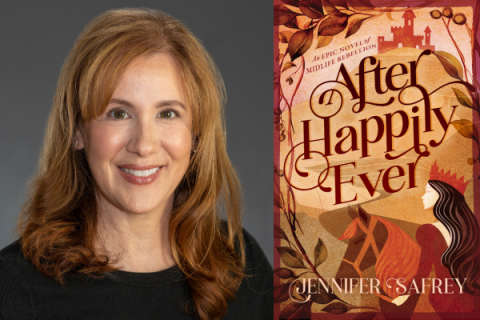
After Happily Ever being where most fairy tales end. What first sparked the idea to explore what happens to the princesses after the crown is won and the wedding bells?
It’s always hard to say where and when the first idea is sparked, but I was inspired by hearing my friends and women online—middle-aged women—talking about how after a certain age, they become invisible. I’ve experienced this myself, and I’ve been unsatisfied with many portrayals of middle-aged women in fiction: sad, lonely women getting their lives together after their husbands left them for younger women, or pathetic women who don’t know how to text someone or use an app (never mind that Generation X basically invented the Internet). I was sick of the vibrant women my age showing up in fiction as sad sacks. I’m not sure what sparked the fairy-tale angle, but I wanted to show middle-aged women changing their lives and making important decisions long after age 21.
Your princesses are now in midlife, facing aging, identity shifts, and unfulfilled expectations. Why was it important to tell this story through the lens of women over 50?
I’ve always been a bit of a master of reinvention of my own life: going from the newspaper industry, to writing, to owning and operating a yoga studio, back to writing. My hobbies have also been all over the place. I don’t believe life decisions end at 21. Middle-age women have wisdom, and I wanted to show women, given no agency by their society, taking it for themselves.
Beauty, worth, and visibility are recurring themes, especially through Della’s arc. How did you approach writing about aging and self-worth in a genre that often celebrates youth?
I identify a lot with Della because I struggle with my outward appearance changing, and in learning how to prioritize the legacy I’ll leave over what I look like every day. It hasn’t been easy, but also, the middle-aged women I know personally are beautiful because of their strength.
Readers have called the novel “creative and timely. What conversations about womanhood, autonomy, or reinvention did you hope to spark with this book?
I want women to talk about taking what they didn’t have but wanted as younger women. I don’t want middle-age women to feel complacent; we’re anything but. I want women to encourage each other and celebrate their moments of rebellion against a society that doesn’t value aging women. We can value ourselves.
What surprised you most about readers responses to the book so far?
I’ve been really pleasantly surprised so far, honestly. Readers have told me about which princess they identify with the most, which is fun. One reader told me she was very happy about one character being a trans woman, which I loved. One reader showed up with a red velvet cape to my book signing and said they were channeling the character Rowan!
When you began writing After Happily Ever, did you start with a clear vision of the story, or did the characters reveal themselves as you went?
I started with a vision but that vision shifted a bit over time. I did have a clear sense of the arcs I wanted each of the three main characters to take, how I wanted them to transform by the end of the story, and I think that’s the most important thing to know—it informs all my plot choices because I’m trying to find plot points that most challenge the character to grow toward that transformation, even if they don’t want to.
How did you approach reimagining such iconic fairy tale figures while still making Neve, Della and Bry feel entirely your own?
I was very careful not to over-research. I read the Grimm fairy tale (and in Cinderella’s case, the Perrault fairy tale) and that was it, and I used those original stories as source material and made the rest up. I didn’t watch the Disney movies (I saw them as a young child) because Disney is a retelling, and I didn’t want to be influenced by Disney’s vision of those characters.
Where does writing fit into your daily life? Are you a routine writer or do you write in bursts of inspiration?
I write in bursts if I’m not on a contract deadline. If I’m on deadline, I’m far more disciplined. I’ve found inspiration matters far less than discipline. I write when I feel like it, and I write when I don’t, because it’s my job.
What can you share about your next project or projects?
I’m in the middle of writing the Moonrise Inn romance series, a series of four books that takes place at a charming inn in Rhode Island. The first two books are out, and the second two will come out in spring 2027. I also have a romantic fantasy project I’m not ready to talk about yet!
Bio:
Jennifer Safrey lives in the Boston area with her novelist husband, Teddy, and their two cats, Kimura and Potus. She’s a longtime freelance editor, as well as an adjunct professor at Emerson College, where she teaches a graduate course on Romance novels. She grew up on Long Island, After Happily Ever is her seventh novel.
Find Jen online at:
http://www.jennifersafrey.com/
Facebook: https://www.facebook.com/JenniferSafreyAuthor
Instagram: @JenniferSafrey_author
TikTok: @JenniferSafreyauthor