

Scribbler’s Ink March Newsletter
/Welcome to March’s Scribbler’s Ink Newsletter!
Your monthly dose of creativity is here, packed with flash fiction contest winners, fun writing prompts, author spotlights, and bite-sized craft tips to keep your words moving.
Whether you’re polishing a manuscript, exploring a new idea, or simply looking for a moment of creative connection, we’re here to support your journey. Let’s dive in and see what this month has in store. Grab your favorite pen (and latte) and let’s jump into the magic.
Winners of Scribblers Ink Flash Fiction Writing
December Scribbler’s Flash Contest Winner
Catherine Doyle
The thing about the last gift is that oftentimes you don’t recognize it as the last. At the time, it’s just a gift, lovingly given in a long line of gifts yet to come.
I never imagined that I would become a high school English teacher at the age of 45. But due to various circumstances and a cobbled road that I was compelled to follow, there I was in August of 2005, embarking on a third career and navigating the same hallways and classrooms as my two teenaged children with only one question circling through my mind: “What the heck have I done?”
Being a newbie, I was not given the privilege of having my own classroom. Instead, I was assigned to a room where I would share space with a veteran teacher whom I had never met. To my great surprise and relief, Chris welcomed me into her established domain, emptied the second teacher’s desk beside hers, and told me to make myself at home. Home. From the moment I walked into her classroom, Chris generously shared not only the classroom tools I would need to succeed, but more importantly she shared every kernel of wisdom that she had amassed over her 20 years of teaching, which was everything to me. Her classroom became our classroom – my home away from home.
She shared lesson plans, class sets of books that she had generously bought with her own money, and taught me how to deal with the most challenging students. And believe me, they were challenging. As I sat in on her classes during my prep time, I would marvel at the way in which she masterfully held her students as a captive audience.
“How does she do that?” I would wonder. Then at the end of the day, exhausted and often defeated, I would slump into my car and cry. It was all too much. I couldn’t
imagine ever becoming the teacher Chris was.
Over the next seven and a half years, Chris and I became the best of friends. Kindred spirits, really. Not only in school, but outside of school. We grew to know each other’s families and enjoyed getting together as couples with my husband Bill and her husband Dennis. I never laughed with anyone like I laughed with Chris. Imagine getting to go to work with your kindred spirit every day. What a gift.
Which brings me to the topic at hand.
It was February vacation, 2013. Having taught her English 101 class at Worcester State University where she was a part-time adjunct professor, Chris walked outside onto what she didn’t recognize as black ice and proceeded to tumble down the icy steps which resulted in a broken ankle. It didn’t help that she was wearing 3” heels. Oh, did I mention the shoes? Chris was known at school as the Shoe Queen. She never wore the same pair twice in a school year. And these weren’t comfy teacher shoes; they were mostly spiked heels in every imaginable color and material. This day she wore 3” blue suede pumps. Yes, in February. Never let the weather get in the way of a fashion statement, according to Chris.
When she called that Wednesday night to tell me what had happened, she said that she would have to wait for the swelling to go down before she was scheduled for surgery on Friday morning. “Why on earth were you wearing those shoes in this weather?” I chided her. “I’ll come over tomorrow night with dinner. I’ll see you then.” The Last Gift. Little did we know.
The following night, as promised, I brought dinner to her as she lay propped up in bed with her wrapped ankle elevated on two pillows. I clearly remember those blue suede pumps now kicked off into the corner of her bedroom. “Damn you,” I thought. “Sorry," they whispered.
As always, we laughed until we cried over who-kn0ws-what. It didn’t take much. When it was time to go, she got up and walked me to the door, which was against doctor’s orders. But rules never applied to Chris; she marched to her own drum. “I’ll see you Saturday. Call me after your surgery tomorrow if you’re up to it,” I said. I gave her a gentle hug and told her to promise me she would now go back to bed. Unbeknownst to both of us, that meal, that visit, that hug, would be our last gift.
The surgery was a success. Chris called me in the evening and I told her that I would drive her to school when she was ready to come back. “But we’re not getting there at six o’clock like you do every morning. That’s insane,” I warned her. Then I told her that I would visit her after my daughter’s appointment with the wedding florist in the morning, as we were planning her wedding for July. Chris was excited to make all the hors d’oeuvres for the reception as a gift to Sarah. Always the giver. Her heart exploded with gifts. Whether it was buying prom dresses for students who couldn't afford them
otherwise, preparing and delivering Thanksgiving dinners to students’ families, or taking in a homeless boy who had no place to go, Chris was the consummate giver.
Well, Chris would never make those hors d’oeuvres for Sarah’s wedding. That gift would never come. She died in her sleep that night due to a blood clot to her lung. Just like that, our evening together became our last gift. The meal, the laughs, the hug, the promises … each one of them became The Last in the blink of an eye.
That’s the thing about the last gift: You just never know when it will come.
January Scribbler’s Ink Flash Contest Winner
Lilly Pearce
Theme: Beginnings
Did it begin before I even knew how to name it?
My mother always insisted my wanderlust didn’t’ arrive alter, shaped by books or circumstance, it was there from the start, woven into me, as if somewhere in my DNA alongside everything that makes me who I am, there was already a quiet, irresistible instruction: go.
According to my mom, I was always in motion. I rolled over early, crawled early, pulled myself
up before anyone expected it. And once I understood that there was a world beyond wherever I’d been placed, I wanted it. Not with caution. Not with fear. Completely.
If there was a gate, I climbed it. If there were steps, I found my way down them, more determined than careful. Fear didn’t enter into the equation. It wasn’t recklessness. It was recognition. Somehow, I already know there was something waiting just beyond my line of vision, and I simply hadn’t reached it yet. But, it was important I did.
It was never about wanting more or better for me. It was curiosity, pure and unwaveringly I didn’t long for greener grass: I wanted to understand the field itself and what was beyond the corner I couldn’t see. As I grew older, it became an unsatiable quest to know who were the people living lives entirely different than my own. What did they carry with them, memories? Losses, victories? What were their stories?
Even as a child it was never only places that called to me, it was people. I was drawn to older people, the more ancient the better. I would sit beside them, asking endless questions that felt so much larger than me or my world. Where did you come from? How did you get here? did you leave family behind? Did you ever go back?
And always, did you miss it?
Their answers became my first journeys. Through their stories, I traveled to places I couldn’t [ yet find on a map, villages, cities, lives shaped by distance I could hardly comprehend. That, too, felt like a beginning for me. That moment I understood that the world was not just wide, but layered, filled with lives, stories I had yet to encounter.
As I grew older, that pull grew stronger. In school, while equations and formulas filled the board, my mind drifted elsewhere, toward imagined routes and distant horizons. I wasn’t solving for X, I was mapping out paths across continents. I was Marco Polo, moving through unknown lands. I
was Amelia Earhart chasing the edge of possibility. My dreams had direction. They always had.
And though I grew up in a sheltered community, where life followed a familiar arc that offered comfort and steadiness, there was a part of e that leaned outward. Not from dissatisfaction, but from knowing somewhere deep inside me that there was more to see. Maybe that’s what
beginnings really are. Not a single starting point, but a series of small awakenings. A body that just won’t stay still. Questions that won’t remain quiet. A story that opens into another and then another.
By the time I reached the end of my first year of college, that beginning had me firmly in its grip. My restlessness had a definite shape that pressed against the edges of my life in a way I could no longer ignore. I knew with an absolute certainty that felt both thrilling and scary that my education lay beyond the four walls of a classroom.
It began in motion. In questions. In listening.
And now, this new beginning was asking me to follow it.
February Scribbler’s Flash Contest Winner
Jenna Coviello
Theme: Love
I have been preparing for the day I would lose my mother for years since she was diagnosed
with Parkinson's. It lingered in the back of my mind during every visit home, every major life
event I attended or experienced for someone else - a nagging feeling that there would be many
moments I would celebrate without her.
It’s been as though I’m submerged underwater, stuck in a big tank slamming ferociously on the
glass. It’s difficult to ask for help when you’re already drowning, when the water has already
overtaken you too much and you can’t find the surface, when you’re already too far gone.
Sometimes you can’t step back and recognize the outstretched hand isn’t always trying to fix
everything, it’s just reaching out to show love, to exist in the pain with you.
When things began to deteriorate, I realized that my dad needed an outstretched hand. It may
sound foolish, but I had forgotten about the love my dad has for my mom. My dad is not a
patient person or caretaker by nature. But my mom always said that when it came to the vows of
“in sickness and in health” my dad didn’t just take that vow seriously, he went above it.
But love is not always patient, and it’s not always kind. I watched that first hand with my parents.
I watched my dad’s anger and short fuse. I watched my mother be hurt by those reactions. My
mom has always been a sensitive person, but Parkinson’s only made those sensitivities worse.
He knew none of this was my mother’s fault, I knew that, but when you watch someone be
angry for what feels like years on end, you can forget. You can forget that before any of this,
there were two people who fell in love, who got married, who raised a family because it was
what they both wanted.
The first time my father broke down as we both started to recognize the reality of my mom’s
situation, I hate to admit I was taken aback. I could even hear in my mind, oh, this actually hurts
him too? This is really as painful for him as it is for me, maybe even more so. If my dad showed
pain up to that point, it was in anger. It wasn’t in sadness. It was jarring to realize all the signs of
love I had been mistaking for only obligation - the bedtime routines, the scheduled alarms to
stay on top of pills, all the various, inventive ways to keep her propped up in her chair, and her
favorite ice cream always in the freezer. I mistook it all as obligation as my father guided my
mother through a delicate dance of endless, fierce care.
I didn’t always like how he acted. I will be the first to say that. There were nights where I wanted
to scream at him, to push him away from her so I could hug her too tightly and console. She
was dealt a horrible hand of cards, worse than any of us. But my parents chose to play this
game together, so if my mom had a terrible deck, then it didn’t matter what my dad had. He
would protect her, use his own cards, form a new strategy. But unfortunately, there’s no winning
a game like this, and that’s the risk you take with loving someone so fiercely.
The inevitable end to my mother’s. There was a tornado warning while my mother was in the hospital. She had a room at the end of the hallway, and there was a window that overlooked the rest of the campus. I had watched as the rain swept over us from a distance away. It was poetic, and scary, and calming, and nerve wracking. The rain pummeled down, and we had gone back into my mom’s room where she sat lucid, eyes wide open, which was exciting to experience at that point in her journey.
“It’s raining out there, Mem,”
I remember saying, and my dad and I had explained the rain to her, how hard it was pouring. I don’t remember if she said anything back, but I remember that time. I
remember hearing the rain pounding on the roof, the cable being out, and the darkness that
overtook the space.
I don’t know what we did the rest of that night, but I do remember the worry. But that’s the thing
about storms, you can’t just ignore them and hope they go away. You need to make
preparations, be aware. I thought about summer storms when I was a kid and my mother
instructed us to go around the house to close the windows. Storms must be endured, it’s the
only way through them.
We are in the storm now. The skies have not yet parted. There are new areas of this grief that
have yet to be explored. There’s coming out the other side to the outstretched hands who have
always been there, patiently waiting for us to take hold. They shake more now, less stable than
they once were. Because a mother was not just lost - a wife was, a sister, an aunt, a friend. This
great pain of love is not felt alone. I’ve watched it wash over my cousins, felt it rip open in my
aunt’s chest, heard it break in my brothers’ deep voices, see it stare back at me in my father’s
eyes each day. It’s pouring here, but we’re doing the best we can to keep each other dry, and
realizing the storm is and never was endured alone.
Writing Prompts for the month
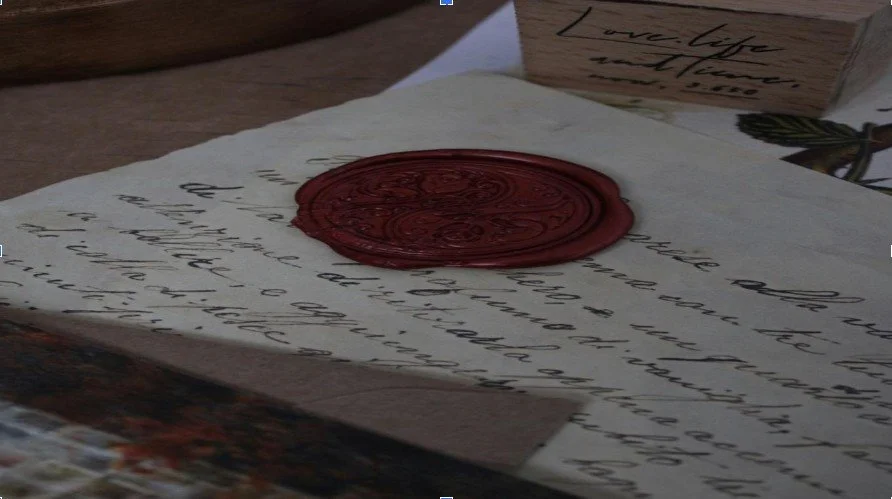
On the night before her wedding, your protagonist receives a letter form a stranger who claims they’ve loved her in every life she ever lived and this time they refuse to lose her again…
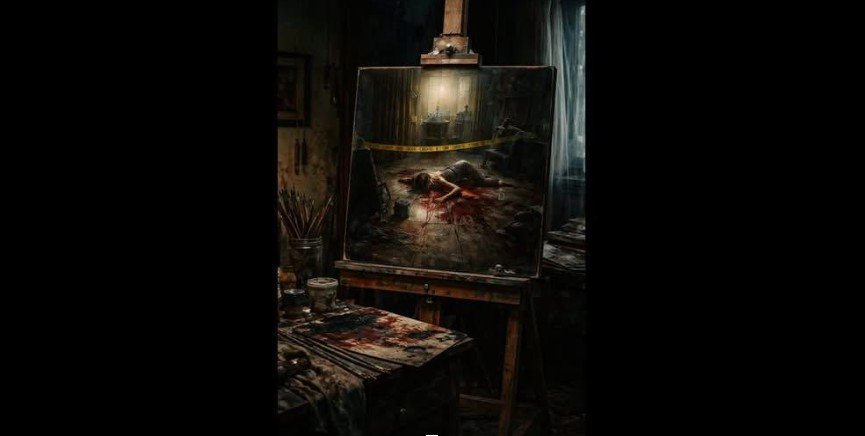
When I reclusive artist dies, the final portrait left on the easel isn’t of a model but of a crime scene that hasn’t been discovered yet…
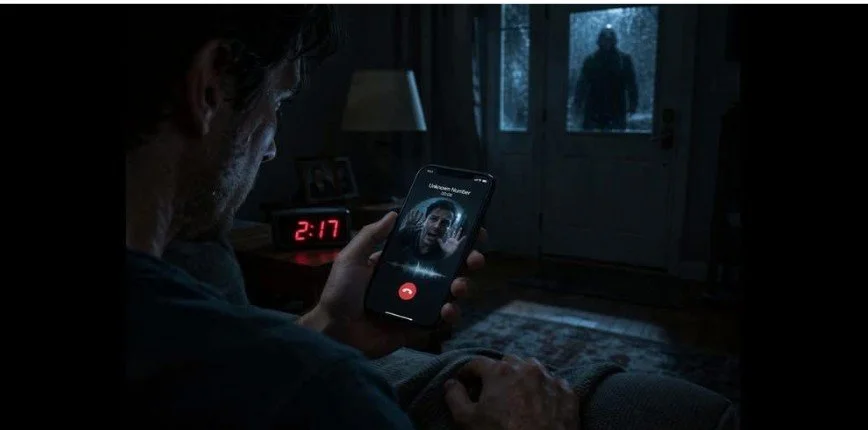
Every night at exactly 2:17 a.m., your character’s phone rings form an unknown number and one night, he finally answers and hears his own voice begging him not to open the front door…
In a world where memories can be traded like currency, your protagonist discovers someone has been secretly buying every painful moment from her past and leaving behind something far more dangerous in its place…

Practice Writing: What is it? And why should you do it?
By Bobbi Lerman
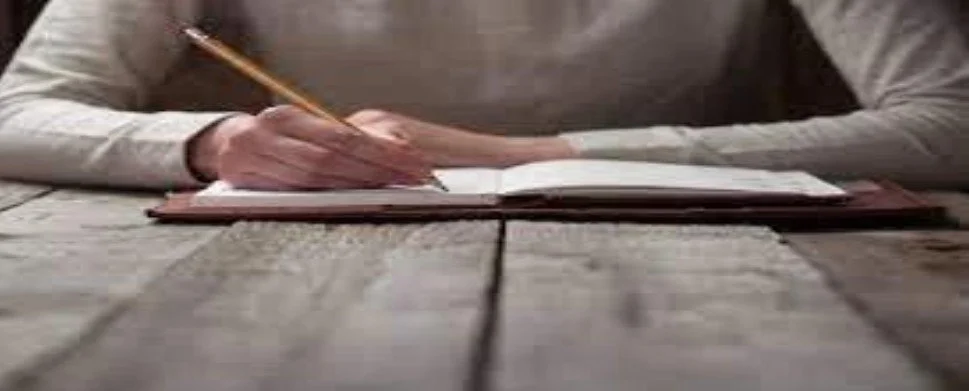
What is practice writing, why do it? Well, the simple answer is it’s just what it sounds like: practice.
Have you ever heard of a concert pianist making their debut without years of practice? I am absolutely certain Yo-Yo Ma practiced the cello a lot, just as I am positive Jack Nicklaus spent hours upon hours hitting golf balls. Monet probably did a lot of practice sketching before the final version of his “Water Lilies.”
Yet so many writers think they should just be able to sit down and write that Pulitzer Prize winner on the first or second sit-down, with no warmup whatsoever.
Free writing—or practice writing, as Natalie Goldberg calls the exercise in Writing Down The Bones—is one of the best tools for writers of all levels, from the person looking to write their first piece to the seasoned writer needing to break through an endless block and reconnect with their lost or forgotten muse. Timed prompt writing never fails to jump-start one’s creative flow, lead a writer to discover their voice, or strengthen the voice already in place.
What is this? How does it work?
Practice writing is simple. It can be done alone or with a group, though personally, I find
the group setting more fun. All you need to do is pick up a pen, set a timer, and write for five minutes, ten minutes, fifteen minutes, or longer if you find your muse kicking in. The inner critic is never allowed. They should be treated much like a vampire: without an invitation to enter, they cannot cross the threshold.
The exercise of practice writing is all about loosening your thoughts and setting them free. It’s about uninhibited flow and building self-confidence. It’s about blasting apart any blocks standing in your way, including fear of failure, inner critics, anxiety, or any other forms of resistance you can dream up. If you have an idea that has been percolating in the back of your mind, but you can’t quite seem to get it out, try a few sessions of practice writing. It will help.
Is there a particular technique?
Apart from setting a timer and picking up your pen, the answer is no. You can choose a topic if you want to have some structure, or expand on a particular subject that has been on your mind. You can write from your own life, or from a character in a story you are working on or thinking about developing. I’ve often found when I don’t know what direction in which to take a character, writing from their point of view helps.
Willingness to take a risk is always to be encouraged. There is no need to worry about perfection or publication. Grammar and spelling are unimportant in this stage. Editing is not allowed. The words created in this exercise are not ones you need to let anyone see or hear unless you choose. The purpose of the exercise is to keep your hand and your pen moving across the page continuously until the time goes off. Feel free to stray off topic, letting your thoughts go where they will. Remember, practice writing is just that—practice. Good, bad, brilliant … it doesn’t matter. Keep writing.
If you can’t think of anything to write, scribble I can’t think of anything to write or the line of the prompt over and over until a line of thought crystalizes.
The key to a successful practice writing session is to get out of your head. Do not overthink; just pick up the pen and write. Do not stop and reread what you have written until the timer goes off. The point is to get the words flowing out of your brain and onto the paper. If you stop to worry over whether what you’ve written is good, then a block will be thrown up rather than torn down—and breaking down those blocks is the point of the exercise!
Practice writing is the ultimate blockbusting tool with only one rule: WRITE!
Bio: Bobbi Lerman is the founder of Scribbler’s Ink, a vibrant online writing community dedicated to inspiring creativity through author interviews, writing tips, daily prompts and immersive workshops. A versatile writer, Bobbi crafts evocative travel and personal essays, and historical romance. Her works has appeared in numerous magazines and anthologies. You can follow her on Facebook at: https://www.facebook.com/groups/351022088275863 Instagram at: @scribblersink6 and http://www.scribblersink.com/
Happy Writing!