

August Scribbler’s Ink Newsletter
/
Welcome to August’s Scribbler’s Ink Newsletter!
Your monthly dose of creativity is here, packed with flash fiction contest winners, fun writing prompts, author spotlights, and bite-sized craft tips to keep your words moving.
Whether you’re polishing a manuscript, exploring a new idea, or simply looking for a moment of creative connection, we’re here to support your journey. Let’s dive in and see what this month has in store. Grab your favorite pen (and latte) and let’s jump into the magic.
Winners of Scribblers Ink Flash Fiction Writing
March Scribbler’s Flash Contest Winner The Door You Never Locked by Rumaisa Reza
I stood outside the door longer than it should have taken to knock.
The hallway was quiet, every small movement felt louder. Even my breathing felt misplaced, like I was disturbing the silence that had settled. A thin line of light slipped through the gap beneath the door, steady and warm.
I had practiced what I would say. On the stairs. At the corner of the street. Even just a few seconds ago, standing right here. The words had sounded convincing in my head. But now, they felt useless.
My hand lifted, then stopped midway. I told myself I just needed a second. Just one more second to get it right. But there was another thought, lingering. If the door was locked, I could leave. I could tell myself I tried.
My fingers brushed the handle. The metal was colder than I expected. For a moment, I just rested it there, barely touching, as if that would somehow count as trying. As if hesitation could soften what I had already done.
Then before I could change my mind, I pressed down. The handle turned too easily. Without
resistance or pause. Just a click, echoing in the stillness of the hallway.
I swallowed, my hand still on the handle, and slowly pushed the door open just enough to see inside, preparing myself for anger and rejection.
There he was, sitting on the sofa, head lowered. Exactly how he used to, as nothing had shifted, as if time hadn’t destroyed us.
I don’t know why that surprised me. Maybe I had imagined an empty room, or darkness, or anything that would give me a few more seconds to exist without being seen. The light I had noticed from outside spilled softly across the floor.
For a moment, I thought about closing the door again, the way it had been before I touched it. Pretending I hadn’t come at all. But the floor creaked under my weight, a small, betraying sound. And he looked up without shock or confusion.
“You came.” His voice was steady.
I opened my mouth, but nothing followed. All the words I had carried with me seemed to scatter at once, leaving nothing behind that I could hold onto. So I stood there, half inside, half outside.
I let out a breath I hadn’t realized I was holding. “I almost didn’t.”
My voice sounded unfamiliar. I cleared my throat, trying again. “I—”
The rest wouldn’t come out even though I had practiced neat, careful sentences, building and rebuilding on my way here. He didn’t rush me. That was the worst part.
His gaze stayed on me, not sharply, waiting without expecting anything in return. It made the silence stretch, filling the room in a way that made it harder to breathe.
“I should’ve come back sooner,” I said finally, the words uneven. “I just… didn’t know how to.”
That wasn’t the whole truth. But it was the only part I could manage to carry out into the open.
“Still, you never came,” he said, without any anger.
I nodded. “I just—”
The word stayed where it was, lodged somewhere behind my teeth. I didn’t say it out loud, but it settled between us anyway, heavy and unmistakable.
For a second, neither of us spoke.
My eyes drifted past him, catching on small, familiar things; the edge of the table, the chair by the window, the book I had once said I’d finish and never did. Nothing changed. Or maybe I was the only one who did.
“I thought about coming back,” I said, “but every time I got close, I kept thinking…” I sighed, shaking my head slightly. “It wouldn’t make a difference. Not after—”
The sentence broke off again, but this time it didn’t need to be finished.
Not after the night I didn’t stay. Not after the messages I never replied to. Not after choosing silence when he needed me the most.
The memory came in pieces. A phone lighting up in the dark. His name on the screen. But I never answered.
“I kept thinking you wouldn’t want to see me,” I finished, my voice sounded weak even to me.
That wasn’t really it. The truth was harder. I didn’t come back because I didn’t know how to face him after what I did.
I swallowed, my throat tight. “You… the door,” I said, my words stuttering. “Why wasn’t it locked?”
He looked at me for a long moment, tired. “I didn’t think you’d come back,” he said softly. “But I didn’t want to stop you if you did.”
I blinked. The words sank in slowly, heavier than anything I had rehearsed in my head. “Wait… you—” My voice faltered. “You left it open on purpose?”
“Yes.”
It was enough. More than I thought I deserved. I stood there, hand still on the door, feeling the weight of everything I had carried up to this point. He had chosen not to shut me out.
The door was open. It had never been locked.
I took a deep breath. The threshold stretched between us, full of all the things I didn’t yet know if I could hold. I shifted my weight, feeling the floor beneath me, the warmth spilling from the room.
I wanted to step inside. I wanted to cross the threshold and close the distance between us, to somehow make the past smaller with my presence.
The door remained open. Light pooled across the floor, touching both of us, but leaving space for everything I had carried; the mistakes, the silence, the absence.
I realized, then, that the door had never been locked. Only I had stayed away.
I let my hand linger on the frame, feeling its cold metal beneath my fingers. Maybe someday, I will step inside.
The door was open. And that was enough.
April Scribbler’s Flash Contest Winner Second Chances by Sally Bernard
Second Chances
The first time Samantha Carter lost Dakota Ashcroft, she did it with both hands wrapped around the future of the only person who had never stopped needing her. At nineteen, she believed love could overcome any obstacle. She believed in happily ever after was attainable, at least she did until his parents sat across form her in a polished office that smelled of leather, and expensive coffee, informing her she wasn’t the sort of girly their son could afford to love, let alone, marry.
A scholarship student. The daughter of an addict. A distraction, yes, a pretty one, but a distraction none the less. Then Dakota’s mother slid an envelope across the desk.
“Take it. End this now and your mother gets the freest start she deserves.”
Samantha should have refused. Instead, she thought of her mother, newly sober, shaking through those first impossible weeks after rehab, living in the old neighborhood, surrounding by familiar faces and a heartbeat away from another bad decision. She couldn’t save the love of the man who held her heart…and save her mother too. Three days later, Samantha withdrew from college. She and her mother disappeared without a word.
Twenty years later, Samantha had built a life from canvas instead of dreams. Carter Gallery had become a haven for artists who understood that beauty often grew from broken places. The opening-night crown drifted from painting to painting, captivated by a heartbreaking collection signed with a name she’d never heard before
Simon Grey. His landscapes carried an ache she couldn’t’ explain. Every canvas felt like someone searching for a home they no longer believed existed.
“They are extraordinary, don’t you think?”
The voice stopped her heart.
She turned. Dakota. Older now. A few silver threads touched his dark hair, but his eyes… those impossible jade green eyes hadn’t changed at all.
The opening-night crowd drifted from painting to painting, captivated by a breathtaking collection signed with a name she'd never heard before.
Recognition swept across his face."Samantha."
Her name sounded like something he'd carried for far too long.
Neither spoke.
Neither moved.
A young man approached, carrying another framed painting beneath his arm. "Dad, I told you not to have this one hung It’s yours. I know it’s always been your favorite.
Dakota looked from the young man to Samantha. “Sam... this is my son, Simon."
Simon offered an easy smile and extended his hand, “It's nice to meet you."
"Samantha Carter. “Her gaze drifted toward the signature at the bottom edge of the painting.
"You were looking at the name." He smiled. "Grey was my mother's maiden name. She died when I was not quite nine." His fingers brushed the frame with affection. "I paint under her name. It keeps a part of her alive."
Emotion flickered across Dakota's face before he looked back at Samantha "I've spent twenty years wondering why you vanished. I buried a thousand possible explanations."
Silence stretched between them, heavy with everything time had failed to erase.
"And somehow..." His eyes searched hers. "None of them felt true."
Samantha's throat tightened.
For twenty years she'd carried a secret born of love and sacrifice. For twenty years he'd carried only abandonment.
Across the gallery, Simon was called away by a collector. He excused himself, leaving them alone.
For the first time in two decades... There was no one standing between them.
Only the truth.
And Samantha no longer knew whether speaking it would save them....or destroy what little remained.
May Scribbler’s Flash Contest Winner
Waterpark Love by Seri Asmawidjaja
Norman isn’t very good at making a good impression. The story starts at a resort, where he saw the most beautiful girl he had ever seen named Sam. But Norman wasn’t exactly cool. He was known as the biggest loser in his high school. He wasn’t handsome. He had zits all over his face and glasses that made him look nerdy. He had to make a great first impression.
They were at the resort waterpark, and he overheard Sam talking about how she was scared to go on The Snake. The Snake was the biggest and scariest waterslide in the park. He thought, If I go on The Snake, she’ll see that I’m not scared of anything. That plan failed because Norman was scared of everything. He stood at the top of the waterslide for over an hour, waiting to get the courage to go down the slide. Kids laughed at him, but he had nothing to lose, really. He went down the waterslide thinking, what is the worst that could happen? Well, he lost his swim trunks in the water. It wasn’t until the park was closing that an employee had to hand him a towel so he could get out of the pool. Norman hoped Sam didn’t see him.
Later at the buffet, he saw Sam again while he was putting food on his plate. He went over to her
so he could talk to her, but he didn’t see the wet floor sign and slipped. His plate went flying, and all his food landed on him. This time, Sam saw him embarrassing himself. He ran away as fast as he could. He couldn’t wait for this vacation to be over.
He went to the hotel bar with a fake idea: try to drink away his pain. He sat at the bar and was about to order a beer when he notice Sam. Who was dancing with some of her friends. Maybe I’ll just ask her to dance, he thought. He walked over. He smiled awkwardly, and she smiled back, which gave him a little confidence.
“Hi, do you want to dance?” he asked quickly before he chickened out.
“Yeah, sure.”
Norman couldn’t believe it, which is why he didn’t thought it through. He couldn’t dance. He tried, but he knew he was terrible at it. Sam laughed, but not in a mean way.
“Should I give you some pointers?”
Sam showed him some dance moves, and Norman was really improving when a big guy cut in and punched Norman, giving him a black eye.
“A girl like that doesn’t date losers like you. You really thought you had a chance?”
Norman just got up and ran all the way to his room. He went to bed wishing he could have another chance with Sam.
The next day, he noticed some weird things. His black eye was gone, and the date on his phone showed yesterday’s date. He went looking for Sam to see if he could still somehow make a good impression. He found her at the waterpark, but when he walked up to her, he heard her talking about The Snake the same way she did yesterday.
Hold up… yesterday? Norman thought, and then he realized what had happened. It’s yesterday. His wish had come true. He had another shot.
He went on The Snake again. But he had a plan, he put a belt around his trunks so they wouldn’t
come off. Sam saw it and was very impressed that he was brave enough to go from The Snake.
“Why are you wearing that belt?” she asked him as he was getting out of the pool.
“It’s a new style,” he said, trying to sound cool.
“I like it.”
He spent the rest of the day trying to look good. He combed his hair back and got a leather jacket. He didn’t let any food drop on him at dinner.
That night at the hotel bar, Norman had a lot more confidence, but he was still a little scared of the big guy who was going to punch him. Still, with nothing to lose, he decided he was going to stand up to him. He did what he had done last time. He walked over to Sam and asked her to dance. Norman even danced better with some of Sam’s pointers from the last time.
It didn’t take long before the big guy cut in again. But before he could say anything, Norman punched him in the face before he lost the nerve to fight him.
“Norman, what the hell?” Sam yelled. “I thought you were a nice guy, but you’re just a jerk.”
She then helped the big guy with his bleeding nose. Norman had never felt as big of a loser as tonight. He went to bed wishing he could do the day over a third time.
When he woke up, he looked at his phone, and yes, he got a third chance.
This time, he did everything the same as the first time, but after Norman got pushed down, he didn’t run away. Sam yelled at the big guy for pushing Norman for no reason, and they ended up going for ice cream afterward. They planned to go to the pool tomorrow, and when Norman woke up this time, it was the next day.
June Scribbler’s Flash Contest Winner
The Children of Jatay and Daabi by Reuben Romero
In the dawn before the counted ages, when Oldín was s ll young, there appeared in the heights
Da’abi, first among the ancient Powers — a flame unbound, a fire too fierce for the tender
world. Therefore, the Arkanna set him far above the lands, that he might wander in his
appointed course and bathe the seas and mountains with his heat.
Thus, was he made Sun.
A er him rose Jaci, spirit of the Moon. Her form was like a woman fashioned from blue crystal,
and her gaze held a mystery older than speech. When Da’abi saw her, his fire trembled. From
that hour he followed her wherever she wandered, though he knew not yet the name of love.
He pursued her from the eastern edge of heaven to the far gates of the west. Yet whenever he
drew near, Jaci waned and withdrew into the hidden chambers of night. And when darkness
returned, there she shone again — solitary, blue, burning so ly above the sleeping world.
From the abyssal waters Jatay beheld this chase.
She was the spirit of the seas. Over the vast hollows of Oldín she had poured herself, and the
western and southern waters became her inheritance, rising and breaking in the tumultuous
union of the deep. At first, she watched Da’abi and Jaci with wonder only. But soon wonder
became longing. His heat descended upon her like a hand of fire; his light pressed her waves
un l they ran like living silver; his ardor s rred hidden currents that had slept since the forming
of the world.
And Jatay, who had known neither tenderness nor shame, discovered desire.
She li ed herself toward him in shining swells. She opened her waters beneath his path. At
evening, when Da’abi bent toward the west and seemed to sink into her arms, she wrapped him
in red mist. His heat touched her, and from their mee ng rose clouds heavy with salt and secret
fire. For a moment each day she believed he had come to her.
Yet always he returned to his chase. Beyond the veil of dusk, his longing bent only toward Jaci.
Then jealousy came into the world.
For the Moon, pale and distant, did not burn beneath Da’abi's touch, yet she commanded what
Jatay could not possess. With her blue influence Jaci drew the seas a er herself, moving
through Jatay's body from afar. The des obeyed her silent calling, and Jatay raged to feel
another's hand moving through her depths.When Jaci ascended, Jatay li ed her waves as spears. When Jaci withdrew, Jatay dragged the
waters a er her, moaning through caverns and black reefs. She sent storms upon the coasts and
hurled foam against the cliffs, crying out in a voice of salt and thunder. Da’abi, blinded by
pursuit, saw only the blue flame that fled before him.
At the edge of one ancient day, Jatay rose.
She gathered all her waters into one vast body and struck him as he descended. Her waves
closed around his burning rim; her depths hissed beneath his fire. And from the wound of their
collision spilled colors like blood across heaven and sea.
Since that hour, the horizon is stained each evening with the memory of her vengeance.
Yet from that wound came more than rage. Through ages beyond coun ng, Da’abi's heat
touched Jatay, and Jaci's blue power troubled her in turn. Clouds were born, rains were carried
over mountains. Snow fell in the high places. Floods filled the valleys. Winds crossed the world
like messengers without masters.
Without knowing it, from the strife of Sun, Moon, and Sea, four children were conceived.
At first, they were only influences, nameless, moving through Oldín like dreams beneath the
skin of crea on. But as the ages turned, they gathered strength un l they awoke as tans, each
unlike the others, each born in discord.
Ja'ak came first — Wind, restless and invisible, who ran over the waters and tore the clouds
from Jatay's breast. Then Ajchia'ak, the Cold, whose breath hardened rivers and clothed the
mountains in white silence. Third came Kuyóo, green-handed and pa ent, who called roots
from darkness and made the fields remember life. Last was 'Paal, the Ardor of Heat, who
cracked stone, ripened fruit, and burned the valleys when none opposed him.
They knew no peace among themselves. Ja'ak sca ered what Kuyóo planted. Ajchia'ak buried
the world in frost. 'Paal drove back the cold and devoured the rains. And Kuyóo rose a er every
ruin and covered the scars with bloom.
Then Jatay, weary from ages of longing and bi erness, came before Da’abi at the western gate
and asked that he acknowledge their children and grant them an inheritance in Oldín.
Da’abi looked upon the four and saw in them his fire, her waters, Jaci's hidden pull, and the
wounds of the world. He gave each a por on of the year, that none should rule forever and
none be cast away.
To Ja’ak he gave the season of s rring winds. To Kuyóo he gave the season of greening fields. To
’Paal he gave the season of ripening heat. To Ajchia’ak he gave the season of frost and sleeping
earth. Thus was their violence bound into order. And from the rivalry of Jatay and Jaci, from the
longing of the Sea and the pursuit of the Sun, were born the des and the seasons of Oldín.
© 2026 Ruben Romero. All rights reserved
Writing Prompts for the month
Write a story that includes the line: “My lips are sealed…

You open a fortune cookie and it says: This is the last day of your life…

And at that moment I saw the life leave her beautiful eyes, even though she was not dead…

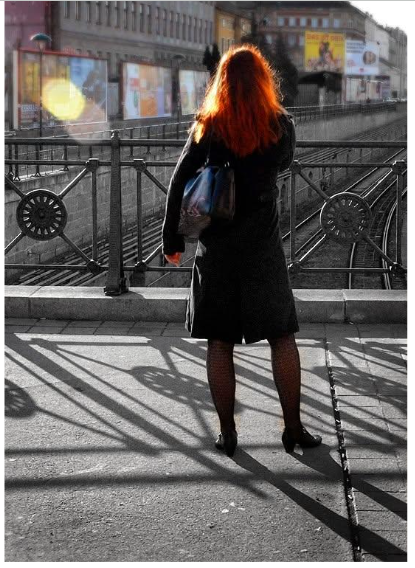
Use the picture below as a prompt or feel free to write whatever inspires you!
Craft Talk Setting The Mood by Bobbi Lerman
Setting is more than a place. It’s more than a simple description to establish where a character in a story is living or traveling to or just hanging out for the moment. Setting is more than an inconsequential backdrop between action scenes or romantic scenes. Setting is mood, atmosphere, tone.
What is a simple definition of setting?
Setting is the location where the story takes place. It includes the region, the look of the landscape, the climate, the buildings, and the interiors of the buildings. It might be the look and feel of the underground tunnel you character is trapped in or the ambiance of the bedroom where you spent your honeymoon. Setting can suggest the passage of time by the use of light, weather, or the hour of the day or night.
It doesn’t matter if you are a novice writer or a seasoned one. As a writer, you need to understand the fundamental elements of setting to create a story that will draw a reader in and keep them turning the pages. The setting of your stories and how you present it is a crucial element to storytelling, whether it be fiction or nonfiction.
Readers need to visualize where your story takes place. They need to feel like they are experiencing it as if they are there themselves. Your readers need to believe not only where they are but when—otherwise as a writer you will lose all credibility. When your story takes place will determine what words can be used to tell your tale. For example, the word noisome (which refers to a small that is particularly
Disgusting disgusting or unpleasant) came into usage in 1350. However, the word confidant (which refers to someone to whom secrets are entrusted) was not used until 1705. You wouldn’t use modern-day medical procedures in a story set in the early nineteenth century, or have one of your characters flick a switch to turn on a light in 1403.
One of my favorite quotes by Edith Wharton: “Every story would be another story, and unrecognizable if it took up its characters and plot and happened somewhere else.”
Think Harry Potter in a Kansas one-room schoolhouse, or Jane Eyre in in a beach house in Malibu.
And then there is time. Did you know there are four kinds of time in a story, each with its own unique role to play? There is clock time, calendar time, seasonal time, and historical time.
What is the difference, you ask?
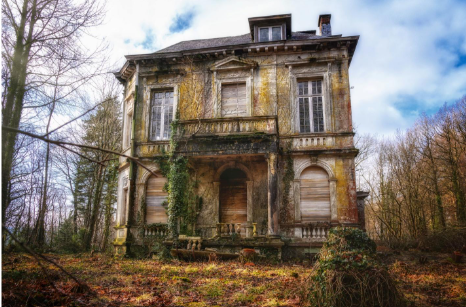
Clock Time will often create a mood or feeling. It can ramp up the suspense or the depth of creepiness. Think your protagonist, alone (or he believes he is), investigating supernatural happenings at an abandoned house, but he needs to wait until the clock strikes midnight.
On to calendar time, which settles us in the year, the month, and the day, usually specifically the day or the week. Americans will recognize April Fool’s Day takes place every year on the first; however, they would not necessarily have a clue when Boxing Day is in England or when exactly Carnival takes place in Venice, as other countries have different calendar dates that would be significant to their culture.
Next up is seasonal time, which refers to the four seasons. Consider how different the atmosphere of your setting, the ambiance, would be if your story took place in February in North Dakota versus St. Barts at the same time. Your characters’ dress would be informed by what season they were living in. Their activities would be dictated by the weather. They won’t snowboard in Florida in April and they won’t go swimming in one of the Great Lakes in February.
Last, but not least, we have historical time, which most often lends to establishing behaviors and attitudes that impact your story’s setting. How people communicated was dependent on the time in which they lived. Expectations of women, for instance, were far different in the 1950s than in the late ’60s or early ’70s. Slang changes radically over the years in the States. Common words used all the time back in the eighteenth century are outdated today or not used at all because they are offensive or recognized as racist. How religious people were, as well as moral and societal attitudes, were often determined by the time.
Place: Where are we?
Place is more than simply a physical description of where the character is. It should involve more than one of the five senses, such as sound, smell, taste, touch. Someone who is waiting for a train in Moynihan Train Hall in New York will have a far different experience a person waiting in an old church in the Italian countryside.
There are the non-physical characteristics of the setting that will impact your story. What is the education system of your location? The upper-class schools of Beverly Hills will be much different than poverty-stricken areas of Detroit, or a parochial school. Neighborhoods, social standing, and economics all put characters in different settings, no matter the year.
Combining the different elements is key. Setting is the context, the foreground of your character’s actions. People exist in a specific time and place. This will contribute to personality, values, and what kind of problems or obstacles befall your protagonist—or villain, for that matter. Setting impacts how the cast of characters that peoples your tale react.
If The Help had taken place in sunny Southern California instead of the ‘60s American South, would it have worked? Or take The Wonderful Wizard of Oz and instead of tornado-stricken Kansas, set it in Mars int eh year 3022. Somehow, I don’t think it would have the same lure to the same readers.
Setting is as equally important as plot or character. Writers will spend hours strategizing and brainstorming story arcs and conflict, and pay little attention to where everyone is. A big, BIG mistake. The place your story is staged provides the backdrop for where your drama will play out.
What are some of the elements to setting?
Locale: This covers everything from which country or state to neighborhood, street, or even a specific house.
Time of year: Which season is it? Are your characters sweating in the heat or skiing in deep powder? It is a holiday or a significant date such as the anniversary of your heroine or hero, or of a battle perhaps?
Time of day: Is it night, dawn, or twilight? The time of day your story is set is an important feature and may vary throughout; however, it will create a particular visual in scenes.
Elapsed time: Over how many minutes, hours, days, weeks, months, does your story play out? You don’t want to confuse your reader by not being clear. Is the passage of time important to your story?
Weather: Does the weather and its lighting effects influence events in your story? If your protagonist is running through a desert for help at midday, the feel and the mood are going to be significantly different than if they are making their way down a city alleyway on a foggy night.
A few more elements you might want to give some thought to: climate, geography, era, social/political/cultural environment, population, ancestral influences. Setting can and should be a character in its own right. Think of it as painting a portrait of a place where the central character is the place linked to the protagonist. One of your goals as a writer—and yes, we as writers have many goals as we weave our stories—is to make the setting a part of the heart of the story.
A few last tips:
Give your setting purpose. Remember it is its own unique character with its own unique voice.
“Show, don’t tell” as much as possible. Show the ferocity of the storm, the thickness of the fog, the wildness of the waves, or the rhythm of the city. Don’t tell your reader it’s the Scottish Highlands in 1309—show the landscape, the thatched cottages, the laird’s keep.
Detail, detail, detail. Is it a luxurious BMW or a beat-up Volkswagen bus your protagonist is driving? Is your heroine staying in a plush hotel sui9te or a weathered saltbox cottage on the edge of the sea?
Use all your senses. What does the place look like, smell like, sound like, taste like?
Last, but not least: Don’t describe setting all at once in the beginning. Work it in slowly throughout the story. Let it unfold as the story does.
Bio: Bobbi Lerman is the founder of Scribbler’s Ink, a vibrant online writing community dedicated to inspiring creativity through author interviews, writing tips, daily prompts and immersive workshops. A versatile writer, Bobbi crafts evocative travel and personal essays, and historical romance. Her works has appeared in numerous magazines and anthologies. You can follow her on Facebook at: https://www.facebook.com/groups/351022088275863 Instagram at: @scribblersink6 and http://www.scribblersink.com/
Happy Writing!